Saturday, August 2, 2014

Multimedia Journalist - Sports


E. W. Scripps Company - Southfield, MI
WXYZ-TV, the ABC affiliate in Detroit, is seeking a productive, resourceful sports multi-media journalist. The job requires strong on-air reporting, writing, and technical skills as well as an appreciation for and understanding of multi-platform journalism. The ideal candidate will be self-motivated and have a track record of producing daily news stories and features of interest to local audiences. A minimum of 4-6 years of reporting experience is preferred, and at least two years is required.

The multi-media journalist is responsible for researching, writing, capturing visual content and editing sports stories for multiple platforms.

 • Receives assignment or evaluates news leads and news tips to develop story ideas. 
 • Gathers and verifies factual information regarding stories through interview,    observation,   and research. 
• Organizes material, determines slant or emphasis, and writes story according to prescribed editorial style and format standards. 
• Shoots video and still photos to illustrate stories. 
• Edits, or assists in editing, videos for all multimedia platforms. 
• Appears on television program when conducting taped interview or narration 
• Gives live reports from site of event or mobile broadcast unit. 
• Write and produce quality news stories for multiple media platforms. 
• Work cooperatively with photographer assigned to story, if one is assigned. 
• Assist news producer in preparing newscast. 
• Assist online staff in preparing for multi media stories.
 • Report, write, capture visual content, edit and produce stories for multiple platforms on deadline, such as Internet and digital channels. 
• Knowledge and demonstration of editorial judgment, journalistic ethics and libel laws Requirements: 
• Computer literacy required, including newsroom computer systems. Videography and non-linear editing experience preferred. 
• Knowledge of broadcast quality camera equipment.
 • Edit video on Final Cut Pro editing systems, or similar equipment.
 • Strong broadcast and AP style writing skills. 
• Proficient at posting content to various websites. 
• Self-motivated and able to work in a fast-paced deadline-driven environment. 
• Valid Driver's License, good driving record and provide proof of insurability with company required insurance limits.
E. W. Scripps Company - 10 days ago - save job

What Is Citizen Journalism?

What Is Citizen Journalism?

  Put very simply, citizen journalism is when private individuals do essentially what professional reporters do - report information. That information can take many forms, from a podcast editorial to a report about a city council meeting on a blog. It can include text, pictures, audio and video. But it's basically all about communicating information of some kind. 

The other main feature of citizen journalism is that it's usually found online. In fact, the emergence of the Internet - with blogs, podcasts, streaming video and other Web-related innovations - is what has made citizen journalism possible.

The Internet gave average people the ability to transmit information globally. That was a power once reserved for only the very largest media corporations and news agencies.
Citizen journalism can take many forms. Steve Outing of Poynter.org and others have outlined many different types of citizen journalism. Below I've condensed Outing's "layers" of citizen journalism and placed them into two main categories: semi-independent and fully independent.

Semi-Independent Citizen Journalism

This involves citizens contributing, in one form or another, to existing professional news sites. Some examples:
  • Readers posting their comments alongside stories done by professional reporters - essentially a 21st-century version of the letter to the editor. A growing number of news websites allow readers to post comments. In an effort to prevent obscene or objectionable messages, many websites require that readers register in order to post.
  • Readers adding their information to articles done by professional journalists. For instance, a reporter may do an article about disparities in gas prices around town. When the story appears online, readers can post information about gas prices in areas not covered in the original story, and even offer tips on where to buy cheaper gas.
  • Readers actively working with professional reporters in putting together a story. A reporter might ask that readers with expertise in a particular area send him or her information on that topic, or even do some of their own reporting. That information is then incorporated into the final story.
  • Reader blogs that are incorporated into professional news websites. That can includes blogs in which readers critique how the news organization is performing.
    Examples:

ေၿခေထာက္တြင္ ဘုရားပံုမ်ားတက္တူးထိုးထားေသာ ႏိုင္ငံၿခားသားတစ္ဦးကုိ တားဆီးအေရးယူ

===============================================
ေၿခေထာက္တြင္ ဘုရားပံုမ်ားတက္တူးထိုးထားေသာ ကေနဒါ နိုင္ငံသားတစ္ဦးအား
ေဒသခံၿပည္သူမ်ား၏တုိင္ႀကားခ်က္အရ ရွမ္းၿပည္နယ္ ေညာင္ေရႊၿမိဳ.နယ္ရိွ နႏၵဝန္ဟိုတယ္တြင္တည္းခုိေနစဥ္ေတြ.ရိွရၿပီး ျမန္မာနိုင္ငံဧည့္ လမ္းညႊန္ အသင္း
MGTA နွင့္ ရွမ္းေတာင္ MGTA မွတာ၀န္ရိွသူမ်ား၊ ရဲတပ္ဖြဲ႔ ဝင္မ်ား၊ လဝက မ်ား
ပူးေပါင္း၍ တားဆီးအေရးယူမႈ လိုအပ္သလို ေဆာင္ရြက္ရန္ စီစဥ္လ်က္ရိွေႀကာင္း
သတင္းရရိွပါသည္။


သတင္းဓါတ္ပုံ- ကုိႏိုင္ေက်ာ္ေဇယ်

၁၉၆၃- ခုႏွစ္၊ ေတာင္သူလယ္သမား အခြင့္အေရးကာကြယ္သည့္ ဥပေဒ

-----------------------------------------------------------------
လက္ရွိ ျမန္မာႏိုင္ငံ တြင္ က်င့္သုံးေနေသာ ေတာင္သူလယ္သမား အခြင့္အေရးကာကြယ္သည့္ဥပေဒ ဆိုတာရွိျပီးသားပါ။လက္ရွိ က်င့္သုံးဆဲ ၁၉၆၃- ခုႏွစ္၊ ေတာင္သူလယ္သမား အခြင့္အေရးကာကြယ္သည့္ ဥပေဒပါပဲ။၁၉၆၃- ခုႏွစ္၊ ေတာင္သူလယ္သမား အခြင့္အေရးကာကြယ္သည့္ ဥပေဒ တြင္ ေအာက္ပါအတိုင္း ျပ႒ာန္းထားသည္။
'' ေတာင္သူလယ္သမား အခြင့္အေရးကိစၥ''
ဥပေဒ ။ ၁၉၆၃- ခုႏွစ္၊ ေတာင္သူလယ္သမား အခြင့္အေရးကာကြယ္သည့္ ဥပေဒ။
( ဥပေဒ အမွတ္ ၉ / ၁၉၆၃ )
ပုဒ္မ ၃။ တည္ဆဲ အျခား ဥပေဒတစ္ရပ္ရပ္တြင္ မည္သို႕ပင္ ရွိေစကာမူ တရားမရုံး တခုခု၏ ဒီကရီ သို႕တည္းမဟုတ္ အမိန္႕ျဖင့္ -
( က ) လယ္ယာေျမကိုေသာ္၄င္း၊ လယ္ယာေျမ လုပ္ကိုင္ရာ၌ အသုံးျပဳသည့္ ကြဲ် ႏြား ႏွင့္ ကိရိယာ တန္ဆာပလာ၊
အျခားသက္ရွိ ကိရိယာ တန္ဆာပလာမ်ားကိုေသာ္၄င္း၊ လယ္ယာေျမ မွထြက္ေသာ ပစၥည္းမ်ားကိုေသာ္၄င္း၊
'' ဝရမ္းကပ္ျခင္း၊သိမ္းဆည္းျခင္း မျပဳရ''။
( ခ ) လယ္ယာေျမကိုမလုပ္ကိုင္ရဟု ေသာ္၄င္း၊ လယ္ယာေျမထဲသို႕ မဝင္ရဟု ေသာ္၄င္း၊'' တားဆီးျခင္း မျပဳရ''။
( ဂ ) လယ္ယာေျမ ကို လုပ္ကိုင္သည့္ ကြဲ် ႏြား ႏွင့္ ကိရိယာ တန္ဆာပလာ၊ထြန္စက္ ႏွင့္ ကိရိယာ တန္ဆာပလာ
မ်ားကိုေသာ္၄င္း၊ အျခား သက္ရွိသက္မဲ့ ကိရိယာ တန္ဆာပလာမ်ားကိုေသာ္၄င္း၊ လယ္ယာေျမ မွထြက္ေသာ ပစၥည္းမ်ားကိုေသာ္၄င္း၊
'' မေရႊ႕ မေျပာင္းရ ဟု'' သို႕တည္းမဟုတ္ '' ေရာင္းခ် သုံးစြဲ ထုခြဲျခင္း မျပဳရ'' ဟု '' တားဆီးျခင္း မျပဳရ''။
( ဃ )'' အပိုဒ္ ( က ) ( ခ ) ( ဂ ) ပါ ကိစၥတစ္ခုခု ႏွင့္ စပ္လွ်ဥ္း၍'' ေတာင္သူလယ္သမားတစ္ဦးဦးကို'' ဖမ္းဆီးျခဳပ္ေႏွာင္ျခင္း မျပဳရ''။
( ၂ ) ပုဒ္မခြဲ ( ၁ ) ပါ ျပဌာန္းခ်က္မ်ားသည္ -
( က ) အစိုးရက ရရန္ရွိေသာ ေငြမ်ားအတြက္ အေရးယူေသာ ကိစၥ၊ သို႕တည္းမဟုတ္
( ခ ) အေမြဆက္ခံပိုင္ခြင့္ ႏွင့္ စပ္လွ်ဥ္း၍ အခ်င္းျဖစ္ပြါးသည့္ ကိစၥ၊ သို႕တည္းမဟုတ္
( ဂ ) ျငိမ္ဝတ္ပိျပားေရးအတြက္ အစိုးရက အေရးယူသည့္ ကိစၥ ႏွင့္ မသက္ဆိုင္ေစရ။
( ၃ ) ပုဒ္မခြဲ ( ၁ ) ပါ ျပဌာန္းခ်က္မ်ားသည္ ၾကက္ေပါင္ေစး စိုက္ပ်ိဳးသည့္ေျမမ်ား ႏွင့္ မသက္ဆိုင္ေစရ။
ဟု - ေတာင္သူလယ္သမား အခြင့္အေရးကိစၥ'' အတြက္ '' ၁၉၆၃- ခုႏွစ္၊ ေတာင္သူလယ္သမား အခြင့္အေရးကာကြယ္သည့္ ဥပေဒ
( ဥပေဒ အမွတ္ ၉ / ၁၉၆၃ ) '' တြင္ ျပဌာန္းထားပါသည္။
** မွတ္ခ်က္။ ။ အျပစ္မဲ့ မတရား ေထာင္က်ေနေသာ ေတာင္သူလယ္သမားမ်ား၊လက္ရွိအမႈရင္ဆိုင္ေနရေသာ ေတာင္သူလယ္သမားမ်ား၊
မတရား ေျမသိမ္းခံရျပီးဘဝပ်က္သြားေသာ ေတာင္သူလယ္သမားမ်ားအတြက္ သိရွိရန္
စစ္တပ္၊ စစ္တပ္ ႏွင့္ ေပါင္းစားခရိုနီမ်ား၊အာဏာအလြဲသုံးစားလုပ္ေနေသာ အာဏာပိုင္မ်ား အဓၶမ ေျမသိမ္းမႈမွလြတ္ေျမာက္ရန္အတြက္ အေထာက္အကူျပဳရန္ ေမတၱာ ေစတနာအျပည့္ျဖင့္ ေဖာ္ျပေပးလိုက္ပါသည္။
ထိန္လင္း ( ခ ) လင္းထိန္ ( Burma Democratic Concern ( B D C ) , UK )

ေက်ာက္မဲၿမိဳ႕နယ္၌ TNLA နွင့္ အစိုးရတပ္ တို႔ တိုက္ပြဲျဖစ္


၃ ၊ ၾသဂုတ္လ၊ ၂၀၁၄ ခုႏွစ္
တအာင္းေဒသ၊ ေက်ာက္မဲၿမိဳ႕နယ္၊ ပါလိုင္ေက်းရြာအုပ္စု၊ ပန္က်ေရာ့ေက်းရြာႏွင့္ မင္းကုန္းေက်းရြာၾကားစတြင္ ယေန႔ ၾသဂုတ္လ ၃ ရက္ေန႔ နံနက္ ၀၈း၅၅ နာရီ အခ်ိန္မွ ၀၉း၁၅နာရီအခ်ိန္ထိ တအာင္းတပ္မေတာ္ တပ္မဟာ(၂) လက္ေအာက္ခံ တပ္ရင္း(၅၂၇)၊ ႏွင့္ ျမန္မာ့တပ္မေတာ္ တပ္မ(၈၈) တို႔ ႏွစ္ဘက္ ရင္ဆိုင္တိုက္ပြဲ ျဖစ္ပြါးခဲ့သည္။
တိုက္ပြဲတြင္ တအာင္းတပ္မေတာ္ ဖက္မွ ထိခိုက္က်ဆံုးမႈမရွိပါ။ ျမန္မာ့တပ္မေတာ္မွ ထိခိုင္က်ဆံုးမႈမသိရွိရေသးပါ။
တိုက္ပြဲေနာက္ဆက္တြဲသတင္းအားဆက္လက္တင္ျပသြားပါမည္။
သတင္းႏွင့္ျပန္ၾကားေရးဌာန
PSLF/TNLA
၀၉ ၄၉၃၁၄၉၅၁၊ ၀၉ ၂၅၆၄၆၅၆၈၁၊ ၀၉ ၄၇၀၉၇၇၇၂၊ ၀၆၉၂ ၆၂၂၄၈၅

citizen journalist

  • လူထု သတင္းစာပညာ ၀၀င္းေက်ာ္င္းေက်ာ္ 
  •  ပထမဆုံးလုပ္ရမည္မွာ ကင္မရာ သုိ႔မဟုတ္ ဖုန္းကိုထုတ္ၿပီး ထုိ႔ေနာင္တြင္ဓာတ္ပုံ သို႔မဟုတ္ ဗီဒီယုိရုိက္ကာ ေ့ဖစ္ဘုတ္ သို႔မဟုတ္ ဆုိရွယ္မီဒီယာတစ္ခုမွာ တင္လုိက္ဖုိ႔ပါပဲ။ အဲဒီလုိလုပ္လုိက္တာနဲ႔ လူထုသတင္းစာဆရာ တစ္ေယာက္ျဖစ္သြားေတာ့တာပါပဲ
  • လူထုသတင္းစာဆရာဆုိတာ ဘာလဲ စာေရးသားျခင္း၊ ဘေလာ့တင္ျခင္း၊ ဗီဒီယုိတင္ျခင္း၊ ဓာတ္ပုံတင္ျခင္း၊ သုံးသပ္မႈ သို႔မဟုတ္ မိမိကုိယ္ပိုင္ အျမင္ကိုေရးသားျခင္းနည္းလမ္းမ်ားျဖင့္ သတင္းစာဆရာ မဟုတ္ေသာသူမ်ားက သတင္းအခ်က္အလက္ကို တင္ျပျခင္းသတငးအခ်က္အလက္ကုိ တင္ျပျခင္း မိမိတုိ႔ရပ္ရြာတြင္ျဖစ္ပြားသည့္ ရာဇ၀တ္မႈအေၾကာင္းဗီဒီယုိကုိ ယူက်ဳဘ္တြင္တင္ျခင္း၊ သတင္းစာေဆာင္းပါးတစ္ခု (သုိ႔မဟုတ္) မိမိေရာက္ရွိခဲ့သည့္ အစည္းအေ၀းတစ္ခုအေပၚ တြင္ သိျမင္ခံစာ.ရသည့္  မိမိအေတြးအျမင္ကို ဘေလာ့ဂ္တြင္ေရးသားျခင္း၊ မိမိၿမဳိ႕ရြာတြင္ ျဖစ္ပြားေနသည့္အျဖစ္အပ်က္မ်ားကို ဓာတ္ပုံရုိက္တင္ျခင္းတုိ႔သည္ လူထုသတင္းစာဆရာမ်ားလုပ္ၾကသည့္ ဥပမာမ်ားျဖစ္သည္။ လူထုသတင္းစာဆရာမ်ားသည္ သတင္းႏွင့္ သတင္းအခ်က္အလက္မ်ား တင္ျပျခင္း၊ သတင္းစုေဆာင္းျခင္းႏွင္ သုံသပ္ျခင္းမ်ားျပဳလုပ္ၾကသည္။ုသန္းခ်ီေသာ ေငြမ်ားရရွိေအာင္ စီးပြားျဖစ္လုပ္ကိုင္ၾကသည့္ အဖြဲ႕အစည္းႀကီးမ်ားႏွင့္ ႏႈိင္းယွဥ္လွ်င္ အက်ဳိးအျမတ္မယူဘဲ အဖြဲ႕အစည္းမ်ားအျဖစ္ ရပ္ရြာသားမ်ားက ဖန္တီးတင္ဆက္ၾကျခင္းျဖစ္သည္။
  • လူထုသတင္းစာဆရာ အေျခခံလူတန္းစားမ်ား သတင္းစာပညာ ကြန္ရက္ခ်ိတ္ဆက္ သတင္းစာပညာ အခမဲ့အခ်က္အလက္ရင္းျမစ္ သတင္းစာပညာ ႏိုင္ငံသားမီဒီယာ ကိုယ္တုိင္ကိုယ္က်ပါ၀င္သည့္ သတင္းစာပညာ ေဒသအျဖစ္အပ်က္အလြန္ ဦးစားေပးသည့္ သတင္းစာပညာ ေအာက္ေျခမွ အထက္သုိ႔ သြားသည့္ သတင္းစာပညာ သီးျခားရပ္တပ္သည့္ သတင္းစာပညာ ျဖန္ေ၀သမႈျပဳသည္ သတင္းစာပညာ
  • လူထုသတင္းစာဆရာလူထုသတင္းစာဆရာ အမ်ိဳးအစားေလးရပ္္ ဓာတ္ပုံမ်ား၊ ဗီဒီယုိမ်ားႏွင့္ အသံဖုိင္မ်ားမွ်ေ၀ျခင္း ဘေလာ့မ်ား၊ ေဖ့စ္ဘုတ္ႏွင့္ အျခားဆုိရွယ္မီဒီယာဆုိဒ္မ်ားတြင္ တင္ျခင္း မိမိအျမင္မ်ားကို မွ်ေ၀ျခင္း မိမိအျမင္ကို အျခားသူမ်ားႏွင့္အတူမွ်ေ၀ျခင္းျဖင့္ အြန္လိုင္းတြင္ မိမိေတြ႕ရွိသည့္ Aေၾကာင္းAရာမ်ားကို မွတ္ခ်က္ျပဳကာ ကုိယ္တုိင္ႏိုင္ငံသားသတင္းစာဆရာတစ္Uီး ျဖစ္လာေပမည္။ ရာေ ေတ ရိခ်က္ ်ာ ကိ ်ေ၀ျခင္ရွာေဖြေတြ႕ရွခ်ကမ်ားကု မွ်ေ၀ျခငး သတင္းမ်ားကို ရွာေဖြေတြ႕ရွိၿပီးေနာက္ Aျခားသူမ်ားAား သတင္းAခ်က္Aလက္မ်ား မွ်ေ၀ျခင္းွ် ျ သက္ဆုိင္ရာ ကၽြမ္းက်င္မႈမ်ားကို မွ်ေ၀ျခင္း ကုိယ္တုိင္က သတင္းစာဆရာမဟုတ္သည့္တုိင္ မိမိတက္ကၽြမ္းသည့္ု ု ရ ု ည ု ၽြ ည Aေၾကာင္းAရာတစ္ခုကို ဘေလာ့တစ္ခု ဖန္တီးတင္ဆက္ျခင္း (သို႔မဟုတ္) တင္ျပျခင္း
  • လူထုသတင္းစာပညာလူထုသတင္းစာပညာ ေနာက္ကြယ္ကေနာက္ကြယ္က သမုိင္းေၾကာင္းသမုိင္းေၾကာင္း ေျမာက္Aေမရိကတြင္ ပထမဆုံးေသာ သတင္းစာကို ၁၉၆၀ ျပည့္ႏွစ္တြင္စတင္ထုတ္ေ၀ခဲ့ၿပီး ေနာက္ မၾကာမီတင္ Aျခားသတင္းစာမ်ားဆက္လက္ထတ္ေ၀ခဲၾကသည္။ေနာက မၾကာမတြင Aျခားသတငးစာမ်ားဆကလကထုတေ၀ခ့ၾကသည။ ထုိAခ်ိန္က သတင္းေထာက္မ်ားသည္ ပေရာ္ဖက္ရွင္နယ္မ်ား မဟုတ္ခဲ့ၾကေပ။ ထိသမ်ားသည္ တစ္ခခကိ စိတ္ဇဲသန္စာ လပ္ေဆာင္လိသည္ ႏိင္ငံသားမ်ားျဖစ္ၾကၿပီးထုသူမ်ားသည တစခုခုကု စတဇြသနစြာ လုပေဆာငလုသည့ ႏုငငသားမ်ားျဖစၾကၿပး ထုိAေၾကာင္းAရာမ်ားကိုလည္း ေရးသားရန္ ဆုံးျဖတ္ခဲ့ၾကသူမ်ားဟု ဆုိၾကရမည္ျဖစ္သည္။ ၎တိ လပ္ေဆာင္ခဲပံမ်ားသည္ ဓာတ္ပံမ်ား ရိက္တင္ကာ၊ ဘေလာမ်ားေရးၾကၿပီး၎တု႔ လုပေဆာငခ့ပုမ်ားသည ဓာတပုမ်ား ရုကတငကာ၊ ဘေလာ့မ်ားေရးၾကၿပး ဗီဒီယုိမ်ားကုိ တင္ၾကသည့္ ယေန႔ေခတ္ ႏိုင္ငံသားမ်ား၏ လုပ္ေဆာင္ၾကပုံႏွင့္ ဆင္တၾကသည္။ဆငတူၾကသည။ ၂၀၀၀ ျပည့္ႏွစ္Aေစာပိုင္းတြင္ ဘေလာ့ဂါမ်ားႏွင့္ မွတ္ခ်က္ေရးသူမ်ားေၾကာင့္လူထုသတင္းစာဆရာမ်ား ေပၚထြက္လာခဲ့သည္။
  • ျမန္မာႏုိင္ငံရွိ သတင္းစာပညာသတင္းစာပညာ
  • ျမန္မာႏုိင္ငံရွိ သတင္းစာပညာသတင္းစာပညာ ၁၂၃၆ တြင္ စတင္ထုတ္ေ၀ (ေကာဇာသကၠရာဇ္)တံခါးဖြင့္၀ါဒ က်င့္သုံးၿပီး ျပင္ပကမၻာႏွင့္ ဆက္သြယ္ရန္ ႏုိင္ငံျခားကုန္သြယ္မႈ တုိးျမွင့္ရန္ ္ႏုိင္ငတကာဆက္ဆေရးကို သိရွိရန္ ေ၀ဖန္မႈမ်ားကို တုံ႔ျပန္ႏိုင္ရန္ နာ ည္ ဏ္သတင္ ျ င္တင္ရန္နာမညဂုဏသတငး ျမွင့တငရန ျပည္သူလူထု Aျမင္မ်ားကို သိရွိရန္ Aမိန္ေၾကာ္ျငာစာမ်ား ထည္သင္းရန္အမန႔ေၾကာျငာစာမ်ား ထည့သြငးရန မတရားမႈမ်ားကို ရႈတ္ခ်ရန္ ႏိင္ငံတကာမ သင္ယရန္ႏုငငတကာမွ သငယူရန
  • `ငါဘုရင္ မေကာင္းလွ်င္ မေကာင္းသလို ငါ့ကို ေရး၊ မိဘုရားေတြမေကာင္းလွ်င္ မိဘုရားေတြကိုေရး၊ သားေတာ္ သမီးေတာ္ မင္းညီမင္းသားေတြ နည္းလမ္းမက်လ်င္ မက်သလိေရး၊နညးလမးမက်လွ်င မက်သလုေရး၊ လႊတ္ေတာ္ တရားသူႀကီးေတြ လြဲမွားလွ်င္ လြဲမွားသလိုေရး၊  ၿမိဳ႕ဝန္မတရားလွ်င္ ၿမိဳ႕ဝန္ကိုေရး၊ မင္းတို႔ သတင္းစာမွာ ဘာAျပစ္မွ် မ႐ွိေစရ။ နန္းတြင္းကို သတင္းစာတုိက္ လူေတြ ဝင္ေစ၊ ထြက္ေစ၊ AဆီးAတား မ႐ွိေစရ´ မင္းတန္းမင္းမငးတုနးမငး
  • လူထုသတင္းစာပညာလူထုသတင္းစာပညာ၏ ေကာင္းမြန္ေသာမ်က္ႏွ္ႏွာစာမ်ားာ မိမိတုိ႔၏ Aျမင္မ်ားကိုေဖာ္ထုတ္ရင္း ဆိရယ္မီဒီယာAသံးျပဳသည္ဆုရွယမဒယာAသုးျပဳသည့ Aျခားသူမ်ားႏွင့္ ထိေတြ႕ဆက္ဆံကာ Aေၾကာင္းAရာတစ္ခႏင္AေၾကာငးAရာတစခုႏွင့ ပက္သက္ေသာ မိမိတုိ႔၏ Aေတြးမ်ား၊ Aသိပညာမ်ား ထည့္၀င္ျခင္းျဖင့္ လူမႈAသုိင္းA၀ုိင္းတြင္ ပုိမုိပါ၀င္လာသည္ဟု ႏုိင္ငံသားမ်ား ္ခံစားလာရေစသည္။
  • လူထုသတင္းစာပညာလူထုသတင္းစာပညာ၏၏ ေကာင္းမြန္ေသာမ်ကေကာင္းမြန္ေသာမ်က္ႏွ္ႏွာစာမ်ားာစာမ်ား တစ္စံတစ္ေယာက္ ေက်နပ္ေစရန္ တည္းျဖတ္ထားျခင္းမရိသည္တစစုတစေယာက ေက်နပေစရန တညးျဖတထားျခငးမရွသည့ လူပုဂၢဳိလ္မ်ား၏Aျမင္မ်ား၊ ၄င္းတုိ႔၏ Aေတြ႕Aႀကံဳမ်ားႏွင့္ စကားလံးမ်ားကိ ေနစU္ေနတိင္း ပံမန္ရရိျခင္းစကားလုးမ်ားကု ေန႔စUေန႔တုငး ပုမွနရရွျခငး သုေတသနျပဳျခင္း၊ သတင္းတစ္ပုဒ္ေရးသားျခင္းႏွင့္ တင္ျပျခင္းတုိ႔ျဖင့္ Aင္တာနက္သံးႏိင္သတိင္းသည္ ျပင္ပကမာႏင္ Aဆက္Aသယ္ရိကာAငတာနကသုးႏုငသူတုငးသည ျပငပကမၻာႏွင့ AဆကAသြယရွကာ မိမိတုိ႔Aေၾကာင္းကို သိေစျခင္း။ ေန႔စU္ဘ၀ထဲမွ ႏိုင္ငံသားမ်ား ရုိက္ကူးထားေသာ ဓာတ္ပုံမ်ားႏွင့္ ဗီဒီယုိမ်ားကို သတင္းစာမ်ားတြင္ပါရွိႏုိင္ျခင္း။ သတင္းစာမ်ားတြင္ ေရးသားထုတ္ေ၀ၾကသည္ Aေခ်ာသတ္ထားေသာ်သတင္းမ်ားထက္ ပုိၿပီး စိတ္၀င္စားဖြယ္ေကာင္းသည့္ သတင္းမ်ဳိးျဖစ္ျခင္း။
  • Aခင္းျဖစ္ရာေနရာမAခင္းျဖစ္ရာေနရာမွွ သတင္းတငသတင္းတင္ျ္ျပျခင္းပျခင္း လူထုသတင္းစာပညာ၏ Aားသာခ်က္မ်ားကို မီးေမာင္းထုိးျပေပးသည့္ Aေကာင္းဆုံးUပမာမွာ ၉/၁၁ Aၾကမ္းဖက္တုိက္ခုိက္မႈပင္ ျဖစ္သည္။ ကမၻာ့ကုန္သြယ္ေရးစင္တာAတြင္းသုိ႔ ေလယာU္ပ်ံမ်ား၀င္သြားၿပီး ခဏမွာပင္ နယူးေယာက္ၿမဳိ႕သားမ်ားသည္ သတင္းမ်ား၊ ဓာတ္ပုံမ်ားကုိ ဆိရယ္မီဒီယာ၀ဘ္ဆိဒ္မ်ားကိ မိနစ္ႏင္Aမ် တင္ေပးခဲၾကသည္။ဆုရွယမဒယာ၀ဘဆုဒမ်ားကု မနစႏွင့Aမွ် တငေပးခ့ၾကသည။ ျဖစ္ရပ္မ်ားျဖစ္ပြားခ်ိန္တြင္ Aထူးသျဖင့္ ႀကဳိတင္ျပင္ဆင္ၿပီး သြားေရာက္သည့္ Aျဖစ္Aပ်က္မဟုတ္ခဲလွ်င္ ထုိေနရာတြင္ သတင္းေထာက္မ်ား Aျမဲရွိႏုိင္မည္ျ ်က ု ့ ွ် ု နရ ြ က ် ျ ရွ ု ည မဟုတ္ေပ။ ႏုိင္ငံသားဂ်ာနယ္လစ္မ်ားကမူ ျဖစ္ရပ္ျဖစ္ပြား ေနခ်ိန္တြင္ ဓာတ္ပုံမ်ားႏွင့္ ဗီဒီယုိမ်ားကုိ တင္ေပးေနျခင္းျဖင့္ မီဒီယာမ်ားAား ေနာက္ဆုံးသတင္းမ်ားျဖစ္ေန ခ်ိ္န္ကို သိရွိေစသည္။ ထုိသုိ႔ျပဳလုပ္ျခင္းသည္ သတင္းတင္ျပရာတြင္ က်ယ္က်ယ္ျပန္႔ျပန္႔တင္ျပေစႏိုင္သည္။
  • တရိပ္ရိပ္တက္လာေသာတရိပ္ရိပ္တက္လာေသာ လူထုသတင္းစာပညာလူထုသတင္းစာပညာ သတင္းမ်ား၏ ေAာက္တြင္ Aျမင္မ်ားကို ေရးသားခြင့္ျပဳျခင္းျဖင့္ မ်ားစြာေသာ သတင္းဌာနမ်ားသည္ ႏုိင္ငံသားသတင္စာပညာ Aသုံးျပဳမႈကို Aားေပးလာၾကသည္။ ႏုိင္ငံသားမ်ားသည္ Aြန္လုိင္းတြင္ မွတ္ခ်က္ေပးျခင္း၊ ဖုန္းျဖင့္ ေျပာဆုိမွတ္ခ်က္ေပးျခင္းမ်ားလည္းပဳလုပ္ၾကသည္။ Aခ်ဳိ႕ေသာ သတင္းဌာနမ်ားကမူ ယင္းတုိ႔၏ သတင္မ်ားတြင္ ႏိုင္ငံသား သတင္းစာဆရာမ်ား ပါ၀င္ေရးသားႏုိင္ရန္Aတြက္ ္ ိၾ ္က႑မ်ားပင္ ထားရွိၾကသည္။ CNN သည္ Aေကာင္းဆုံးUပမာျဖစ္သည္။ ယင္းတြင္ iReport ဆိုသည့္ က႑တစ္ခုရွိၿပီး ယင္းက႑ ေAာက္တြင္ ႏိုင္ငံသားမ်ားသည္ သတင္းမ်ားကို မွ်ေ၀ျခင္းႏွင့္ ေဆြးေႏြးျခင္းမ်ားကို ျပဳလုပ္ႏုိင္သည္။ မိမိ၏ Aသိပညာႏွင့္ သတင္းAခ်က္မ်ားကုိည ွ ့ ် ် ု Aြန္လုိင္းတင္ျခင္းသည္ ပရိသတ္မ်ားစြာဆီသုိ႔ ေရာက္ရွိႏုိင္ေပသည္။
  • လူထုလူထု သတင္းစာပညာသတင္းစာပညာ၏၏ Aေမွာင္ဘကAေမွာင္ဘက္္ မ်ကမ်က္ႏွ္ႏွာစာာစာ လူထု သတင္းစာပညာသည္ တကယ့္သတင္းစာမ်ားကို လူထု သတင္းစာပညာႏွင့္ ပက္သက္ၿပီး Aျငင္းပြားစရာ ႀကီးႀကီးမားမားရွိၾကသည္။့ ် ု ေနရာပုိယူလွ်က္ရွိသည္။ ႏုိင္ငံသားသတင္းစာပညာသည္ ဆုိရွယ္မီဒီယာကို သုံးႏိုင္လွ်င္ Aလြယ္ကေလး လူထု သတင္းစာဆရာမ်ားသည့္ Aလုပ္ႏွင့္ သတင္းတင္ျပရာတြင္ ရွိရမည့္ တိက်မႈကုိ နားမလည္ၾကဟု ပေရာ္ဖက္ရွင္နယ္ု ျဖစ္ေသာ္လည္း လူတုိင္းလူတုိင္းတြင္ ကြန္ျပဴတာ (သို႔မဟုတ္) ဆဲလ္ဖုန္းမ်ား မရိေသးေပ။ န ညၾ ု ရ ရွ န သတင္းစာဆရာမ်ားက ယူဆၾကသည္/ သတင္းစာပညာ၏ AဓိကAခ်က္မွာ ဘက္လိက္မကင္းၿပီး ဘက္မ်သည္မရွေသးေပ။ Aခ်ဳိ႕သူမ်ားကမူ လက္ရွိသတင္းျဖစ္ရပ္မ်ားကို ေန႔စU္သတင္းစာမ်ားတြင္သာ ဖတ္ၾကၿပီး ္ ္ ္ ဘကလုကမႈကငးၿပး ဘကမွ်သည့ Aျမင္တစ္ရပ္ Aျမဲရွိရန္ျဖစ္သည္။ လူထုသတင္းစာဆရာAမ်ားစုသည္ ယင္းAခ်က္ကိ လိက္နာျခင္းမျပဳသည္ဘေလာ့မ်ားတြင္ တင္သည့္ သတင္းAျဖစ္Aပ်က္မ်ားကို ဖတ္ရႈလုိျခင္း မရွိၾကေပ။ ယငးAခ်ကကု လုကနာျခငးမျပဳသည့ Aတြက္ Aမွန္တရားAား ပုံဖ်က္ထားၿပီး မိမိတုိ႔ Aထင္Aျမင္မ်ား ထပ္ေပါင္းထားသည္ သတင္းမ်ားကိထပေပါငးထားသည့ သတငးမ်ားကု ေရးၾကသည္။
  • လူထုလူထု သတင္းစာပညာသတင္းစာပညာ၏၏ Aေမွာင္ဘကAေမွာင္ဘက္္ မ်ကမ်က္ႏွ္ႏွာစာာစာ Aြန္လုိင္းတြင္ ေတြ႔သည့္ သတင္းAခ်က္Aလက္မ်ားကို ယုံၾကည္ထုိက္သည္ဟု လူAမ်ားက ယူဆၾကသည္။ Aထူးသျဖင့္ “သတင္း” ဆုိသည့္ ေခါင္းစU္ေAာက္တြင္ ရွိလွ်င္ျဖစ္သည္။ ယင္းAခ်က္သည္ ယုံၾကည္ကုိးစားေလာက္မႈမရွိလွ်င္ေတာင္ စာဖတ္သူမ်ားက သတင္းAခ်က္Aလက္မ်ားကို Aမွန္ဟု ယူဆသြားေတာ့သည္။ ယင္းႏင္Aတ စာဖတ္သမ်ားက သတင္းမ်ား၏တိက်မကိ ယံၾကည္စိတ္ခ်မလည္းယငးႏွင့Aတူ စာဖတသူမ်ားက သတငးမ်ား၏တက်မႈကု ယုၾကညစတခ်မႈလညး ေပ်ာက္ဆုံးသြားေစသည္။ လူထု သတင္းစာဆရာမ်ားသည္ မိမိတုိ႔ၾကံစည္ေတြးေတာမႈမ်ားႏွင့္ Aျမင္မ်ားမွ သက္ေသ Aေထာက္Aထားကို ခြဲျခားႏိုင္စြမ္းမရွိၾကေပ။ သတင္းစာဆရာAစစ္မ်ားသည္ ထုိသုိ႔ ေရာေထြးမႈမ်ားကို သတိျပဳရန္ ေလ့က်င့္ထားၾကသည္။ ပေရာ္ဖက္ရွင္နယ္ သတင္းစာဆရာမ်ားသည္ သတင္းAခ်က္Aလက္မ်ား မန္ကန္မႈရိေစရန္ ယံၾကည္ကိစားေလာက္ေသာ သတင္းသတင Aခ်ကAလကမ်ာ မွနကနမႈရွေစရန ယုၾကညကုစာ ေလာကေသာ သတင ရင္းျမစ္မ်ားစြာကို Aျမဲမျပတ္ ကိုးကားၾကသည္။ လူထုသတင္းစာဆရာမ်ားသည္ ၄င္းတုိ႔ သတင္းရင္းျမစ္မ်ား၏ Aစစ္Aမွန္ျဖစ္မႈကို စစ္ေဆးႏိုင္ခဲေလရွိၿပီး စာဖတ္သူကလည္း ိထုိAေၾကာင္းကုိ သိႏိုင္မည္မဟုတ္ေပ။
  • လူထုလူထု သတင္းစာပညာသတင္းစာပညာ၏၏ Aေမွာင္ဘကAေမွာင္ဘက္္ မ်ကမ်က္ႏွ္ႏွာစာာစာ လူထုသတင္းစာဆရာမ်ားသည္ Aခင္းျဖစ္ပြားခ်ိန္တြင္ သတင္းရလုိေဇာျဖင့္ျ ြ ်န ြ ရ ု ျ ့ Uီးဆုံးေရာက္ေAာင္ သြားတက္ၾကသည့္Aတြက္ ကိုယ့္ကိုယ္ကုိ Aႏၱရာယ္ျဖစ္ေစမည့္ AေျခAေနမ်ားဆီသိ သက္ဆင္း သားၾကသည္။AေျခAေနမ်ားဆသု႔ သကဆငး သြားၾကသည။ ေဖ့စ္ဘုတ္ကဲ့သုိ႔ေသာ ဆုိရွယ္မီဒီယာမ်ားသည္ ရုန္းရင္းဆန္ခတ္ျဖစ္မႈ၏ Aစမွ Aဆုံးကို ိ ္ ိ ္ ျ ္ ိ ္ ံ ၏တုိက္ရုိက္ ျပေနသည့္ ႏုိင္ငံသားမ်ား၏ တင္ဆက္မႈျဖစ္သည္။ လူထုသတင္းစာဆရာမ်ားသည္ ဓာတ္ပုံ ိ ္ ီ ီ ိ ိ ိ ္ ္(သို႔မဟုတ္) ဗီဒီယုိမ်ားကို ရုိက္ကူးရင္ ရုန္းရင္းဆန္ခတ္ျဖစ္မႈ၏ Aလယ္တည့္တည့္သုိ႔ သူ႔တုိ႔Aႏၱရာယ္ ျဖစ္ေစကာ ေထာင္တန္းက်သည္Aထိျဖစ္ရသည္။
  • ဘယ္သူကဘယ္သူက လူထုသတင္းစာလူထုသတင္းစာ ဆရာတစ္ေယာကဆရာတစ္ေယာက္္ ျျဖစဖစ္ႏ္ႏိင္သလဲိင္သလဲဆရာတစေယာကဆရာတစေယာက ျျဖစဖစႏႏုငသလုငသလ လတိင္း ျဖစ္ႏိင္သည္။လူတုငး ျဖစႏုငသည။ မွတ္ခ်က္မ်ားေပးျခင္း၊ ဘေလာ့ဂ္ေရးျခင္း၊ ဗီဒီယိမ်ား Aန္လိင္းတင္ျခင္း၊ မိမိAျမင္မ်ားဗဒယုမ်ား Aြနလုငးတငျခငး၊ မမAျမငမ်ား ကို ေဖာ္ထုတ္ျပသျခင္း (သို႔မဟုတ္) ္ ိ ္ ္ ိ ္ ္ျ ္ ျ ္ဓာတ္ပုံမ်ားရုိက္ကူးကာ Aြန္လိုင္းတင္ျခင္းျဖင့္ လူထုသတင္းစာဆရာျဖစ္ႏုိင္သည္။ ဆုိရွယ္မီဒီယာမ်ားကို Aသုံးျပဳေနႏုိင္ၿပီး လူမ်ားAၾကား စကားလုံးမ်ားကို ျဖန္႔ေ၀ႏိုင္သမွ် သင္လည္း လူထုသတင္းစာဆရာ ျဖစ္ႏုိင္သည္။
  • ဘယ္သူကဘယ္သူက လူထုသတင္းစာလူထုသတင္းစာ ဆရာတစ္ေယာကဆရာတစ္ေယာက္ျ္ျဖစဖစ္ႏ္ႏိုင္သလဲိုင္သလဲ Aေၾကာင္းAရာတစ္ရပ္ရပ္ႏွင့္ ပက္သက္ေသာ Aားေကာင္းသည့္ Aျမင္မ်ားရွိသူAမ်ားစုသည္ မွတ္ခ်က္ေပးျခင္း (သို႔မဟုတ္) ဘေလာ့တင္ျခင္း (သို႔မဟုတ္) ဗီဒီယုိမ်ား၊ Aသံဖုိင္မ်ား (သုိ႔မဟုတ္) ဓာတ္ပုံမ်ားကို ၀ဘ္ဆုိဒ္မ်ားတြင္ မွ်ေ၀ျခင္းျဖင့္ လူထုသတင္းစာဆရာတစ္ေယာက္ ျဖစ္ႏုိင္သည္။ Aျမင္Aမ်ဳိးမ်ဳိးႏွင့္ လူAမ်ဳိးမ်ဳိး၏ ထင္ျမင္ခ်က္Aမ်ဳိးမ်ဳိးကိုလည္း ေဖာ္ျပႏုိင္သည့္ ေနရာျဖစ္သည္။
  • ဘာေၾကာငဘာေၾကာင္္ ထးျခားထးျခား ထင္ရားရတာလဲထင္ရားရတာလဲဘာေၾကာငဘာေၾကာင့့ ထူးျခားထူးျခား ထငရွားရတာလထငရွားရတာလ UပမာAားျဖင့္ တတိယကမၻာႏိုင္ငံမ်ားတြင္ သဘာ၀ကပ္ေဘးမ်ား ျဖစ္ပြားခ်ိန္တြင္ Aဆက္Aသြယ္မ်ား ျပတ္ေတာက္သြားစU္ ္ ိ ္ ျ ္ ္ ိ ၿ ီလူထုသတင္းစာဆရာမ်ားကုိ Aခင္းျဖစ္ေနရာတြင္ ရွိေနၿပီး တင္ျပႏိုင္ၾကသည္။ ္ ္ ံ ္ ိ ္ ံ ိ ္ ္စစ္ဒဏ္ခံရသည့္ ႏိုင္ငံမ်ားရွိ လူထုသတင္းစာဆရာမ်ားသည္ ျပင္ပသတင္းစာဆရာမ်ားထက္ AေျခAေနကို ပိုမုိနားလည္ၿပီး သတင္ ်ာ Aေ ၚ Aာ ကိ ႏိင္ ရိၾကသည္သတငးမ်ားAေပၚ Aားကုးႏုငမႈရွၾကသည။
  • HTTP://DRLUNSWE.BLOGSPOT.COM/2011/10/BLOG-POST_6365.HTML HTTPS://WWW.FACEBOOK.COM/EXCELLENCEMEDIA
  • HTTP://CJ.MY/POST/94000/CANNED-FRUITS- FROM-THAILAND-TAINTED-WITH-HIV-BLOOD- HOAX/
  • CCODEODE OFOF EETHICSTHICS -- SSOCIETYOCIETY OFOF PPROFESSIONALROFESSIONAL JJOURNALISTSOURNALISTSPPROFESSIONALROFESSIONAL JJOURNALISTSOURNALISTS This code is only three pages long, and full of important concepts The highlights are:important concepts. The highlights are: Seek Truth and Report It—Journalists should be honest, fair and courageous in gathering, i d i i i f ireporting and interpreting information. Minimize Harm—Ethical journalists treat sources, subjects and colleagues as human beings, j g g deserving of respect. Act Independently—Journalists should be free of obligation to any interest other than the public'sobligation to any interest other than the public s right to know. Be Accountable—Journalists are accountable to their readers listeners viewers and each othertheir readers, listeners, viewers and each other.
  • HTTPS://WWW.FACEBOOK.COM/PHOTO.PHP?V=84 5683858780980&SET=VB.100000181218020& TYPE=2&THEATER

Citizen Journalism A Sudden Essential In Myanmar

In the age of YouTube, cellphone cameras and text messaging, technology is playing a critical role in helping news organizations and international groups follow Myanmar's biggest protests in nearly two decades. Citizen witnesses are using cellphones and the Internet to beam out images of bloodied monks and street fires, subverting the Myanmar government's effort to control media coverage and present a sanitized version of the uprising. 
...A shaky video, now on YouTube, shows a sea of chanting and clapping monks draped in red robes marching down a street, past Buddhist monuments. One blog features a photo showing two abandoned, bloodstained sandals. Another blog was updated at 3 p.m. Myanmar time yesterday with a few English lines: "Right now they're using fire engines and hitting people and dragging them onto E2000 trucks and most of them are girls and people are shouting." Below the post is a blurry photo of trucks with the caption, "This is how they come out and try to kill people."

The crackdown over the past few days has been brutal — tear gas, clubbing people in the streets, spiriting people away in trucks at night, shooting into crowds, sealing monasteries, even using slingshots on crowds. Japanese photographer Kenji Nagai was shot and killed yesterday by soldiers as he documented the scene. His shooting itself was captured by an unknown photographer and distributed by Reuters. Despite an attempt by the government to control information flow, thanks to YouTube videos, cellphones, blogs and photos on Flickr, the story is getting out. Or at least, was getting out — the AP is reporting that "the government cut Internet access, raising fears that a deadly crackdown was set to intensify."
Over at the Daily Nightly, NBC Nightly News producer Subrata De has been posting emails from a friend in Yangon (formerly Rangoon) with updates on the situation. On Wednesday, she posted the first email, which detailed how friends were communicating:
My Burmese friends are sending me messages on GoogleTalk; their status messages reflect their states of mind. "Freedom is never voluntarily given by the oppressor; it must be demanded by the oppressed." Martin Luther King,Jr "Buddha + Suu Kyi + Students + People - Army = Democracy under Suu Kyi"
"Status updates" on Gchat and Facebook and the like are a relatively new phenomenon, but this is the first time I have seen a reference to a Gchat status updates being used as bulletin board/broadcast system. It must have been a useful and efficient shorthand mechanism during the upheaval when information was jumbled an scarce — the thing about Gchat status messages, though, is that they only beam out when the person is online. On Wednesday De noted, "It seems everyone there is clinging to the lifeline that technology has given them"; today she writes "This e-mail came in late last night. With the government shutting down public access to the internet, it'll probably be the last note we see for a while."
On Facebook, the Myanmar network page has posted articles and links to 178 groups, including the "Myanmar (Burma) Uprising Worldwide Support" group, which has posted YouTube videos and links, plus information about wearing red today in support of Burma. Another group, "Support The Monks Protest In Burma" has this message:
*--URGENT UPDATE--*
We still have live contacts in Burma. We are getting reports of a massacre at a temple last night, around 200 monks killed. We will try to confirm this as soon as possible. They are arresting and imprisoning monks- so far over 700 have been arrested.
They have raided dozens of monasteries
While the regime is stating only 9 have been killed the number is far closer to 200
They have snipers on tops of buildings to pick of the leaders
They are trying to suppress the violence.
We MUST protest!

Citizen Journalists Report On Myanmar

While the Myanmar’s regime attempts to suppress the protests taking place, citizen journalists are playing a key role in delivery of the news to the rest of the world.


Citizen journalists are using cell phone cameras, text messaging and the Internet to report on the Myanmar government’s effort to control media coverage and downplay the protests.
Sein Win, managing editor of Missima News, an India-based news group run by exiled dissidents told CNN, "The technology is making a huge difference. Now everyone in the world can know what is happening in Burma (Myanmar) via the Internet, It is a reality of globalization. Whether the junta likes it or not, the government cannot isolate itself from the international community."
The AP, Reuters and other media outlets have published photos given to them by exile media organizations including Mizzima, Irrawaddy, and the Democratic Voice of Burma. Talking about his correspondents, Aung Zaw, editor of Irrawaddy, told the Wall Street Journal, "They are doing their job on the ground, and nobody is even giving them the assignment. It is our job to check again with our sources, to see how close to the truth it is."
Reporters Without Borders ranks Myanmar 164 out of 168 for being one of the most repressed media in the world. Despite the regime’s efforts to censor media, Myanmarese bloggers have been able to get around firewalls set up to stop the flow of information in and out of the country.
Irrawaddy’s Aung Zaw sums up the situation saying, "The more they try to suppress information, the more will come out."

Why Asia is Facebook’s biggest strength and biggest weakness

The growth of internet access and smartphone sales in Asia is turning the continent into fertile ground for social networks. But while growing a user base in Asia is one thing, making money is a stiffer challenge.
Asia has been the largest continent of registered users of Facebook for nearly two years. The social network continues to grow in the region despite the popularity of mobile messaging apps — a threat that’s been clear for a couple of years – and a feeling in the West that the service is passe for young people.

Rising user numbers

Facebook’s latest earnings report shows that user numbers in Asia continue to rise sharply, in stark contrast to the relative saturation in the US and Europe.
Two years ago, there were more daily users of Facebook in Europe, and also the US, than Asia. But, as of the last quarter, Asia is far ahead, while the number of users in “the rest of the world” have also jumped.
The numbers are even more pronounced for users who access the site at least once a month — Asia’s figure is more than double the US, and is on par with the number for the rest of the world.

Less money in Asia

Despite this growth, making money in Asia is an altogether different story.
Revenue from Asia has increased more than three-fold in the past two years, but it is still around half of that from Europe, and a third of that from US.
More users and less revenue means that the revenue generated from a user in Asia is far lower than those in Europe or the US.
Facebook is now making a dollar per user in Asia. That’s a good increase on $0.75 one year ago, but it’s well behind the average revenue per user (ARPU) of $6.44 in the US and $2.84 in Europe.

Twitter too

Twitter suffers from a similar issue. The company doesn’t issue the same detailed charts as Facebook, but its latest earnings reveal that two-thirds of its revenue was generated by users in the US, despite most of its users residing overseas.
The company has focused its advertising efforts on the US market first, and it says that international revenue — Europe, Asia and elsewhere — has grown 168 percent over the past year, but we can expect that Asia accounts for a minority of that non-US income.

Why?

Some of the reasons for the large gap in revenue include:
Mobile devices
Most of Asia’s ‘mobile population’ are still on feature phones. Those who have upgraded to smartphones are likely to own an Android device — the operating system accounts for 85 percent of global smartphone shipments.
Android users typically make fewer purchases in general, thanks to payment issues and the lower cost of the phone, which appeals to those on tighter budgets. These factors are amplified by lower average incomes in many parts of Asia.
Low digital media spend
Advertisers in Asia have broadly been slower to adopt digital business models. That is likely a combination of fragmented local media markets, and the fact that internet adoption across the region remains lower than in the West, which means fewer eyeballs for advertisers — though Facebook is working to simplify its offering for brands in Asia.
Low credit cards penetration
Credit card adoption is an important part of payments, and this figure is far lower in Asia than the US or Europe. Credit card penetration is estimated to be around one percent in Indonesia, one percent in Vietnam, five percent in Thailand, to name just three examples.

Mobile is key for the future

Both Facebook and Twitter have a strong presence and revenue model on mobile, which is key to monetizing as efficiently as is possible in Asia.
Facebook has teased a mobile payments service in the future, and may follow the lead of Asian companies by integrating services into its Messenger app — both of which are revenue models suited to Asia.
Ultimately, however, consumer trends and economic factors mean Asian users will almost certainly never spend more than their Western peers on average, but the fact that there are so many people in the region makes Asia an important market to monetize.
Also read: How to create a better Facebook Group that thrives, using Facebook’s own research
Headline image via Brendan Smialowski / AFP / Getty Images

ခ်င္းျပည္နယ္တြင္ ေန႔စားလေပးဆရာ ၁၅၀၀ ေက်ာ္ အလုပ္စခန္႔

ၾသဂုတ္-၂ 

တစ္ႏိုင္ငံလံုးမွာ တကၠသိုလ္၀င္တန္း ေအာင္ခ်က္ အနည္းဆံုးျဖစ္တဲ႔ ခ်င္းျပည္နယ္မွာ ေန႔စား လေပးေက်ာင္းဆရာ ၁၆၀၀ ေက်ာ္ထပ္ခန္႔လိုက္ၿပီး ၾသဂုတ္လ ၁ ရက္ေန႔က စတင္ၿပီး အလုပ္ဆင္းရေၾကာင္း ျပည္နယ္ ပညာေရးဌာန အရာရွိ တေယာက္က ေျပာပါတယ္။
ျမန္မာႏိုင္ငံရဲ႕ ဖြံ႕ၿဖိဳးမႈအနည္းဆံုး ေဒသျဖစ္တဲ႔ ခ်င္းျပည္နယ္ဟာ ပညာေရးက႑မွာလည္း လိုအပ္ခ်က္ေတြ အမ်ားႀကီးရွိေနတာျဖစ္ပါတယ္။

ေက်ာင္းေပါင္း ၁၃၀၀ ေက်ာ္နဲ႔ ေက်ာင္းသား ၁ သိန္း ၁ ေသာင္းေက်ာ္ အတြက္ ပညာေရး၀န္ထမ္း ၈ ေထာင္ေလာက္ပဲ ရွိေနတယ္လို႔ ျပည္နယ္ ပညာေရးဌာန အရာရွိ တစ္ေယာက္ကေျပာပါတယ္။

အဲဒီအတြက္ ဒီႏွစ္မွာ ေန႔စား လေပးေက်ာင္းဆရာ ၁၆၄၀ ကိုထပ္ခန္႔လိုက္တယ္လို႔ သူက ေျပာပါတယ္။

ဒီဆရာေတြအားလံုးဟာ မူလတန္း အဆင့္ေတြကို အထက္တန္းအဆင့္မွာလည္း ဆရာလိုအပ္ခ်က္ရွိေနတာ ျဖစ္ပါတယ္။ ေက်ာင္းဆရာလိုအပ္တာနဲ႔ပတ္သက္ၿပီး ျပည္နယ္ ပညာေရးဌာန အရာရွိ တေယာက္ကအခုလို ေျပာပါတယ္။

“အခုထပ္မံ လိုအပ္ေသးတဲ့ ေနရာလည္း ရွိေသးတယ္။ ဥပမာ – က်ေနာ္တို႔ မူလတန္းေက်ာင္းခဲြ ၁၃ ေက်ာင္း ထပ္ရတယ္။ အခုမွ ထပ္ရတယ္ဆိုေတာ့ အဲဒါေတြက ခဲြတမ္း မပါေသးဘူး။ ေနာက္ အရင္ႏွစ္က ၈၉၀ ခန္႔ထားတဲ့ေနရာမွာ အလုပ္မ၀င္တဲ့သူေတြ ၁၁၀ ေလာက္ ရွိေသးေတာ့ ျဖည့္စြက္လို႔ မရေသးဘူး။ က်ေနာ္အခုေလာေလာဆယ္ အထက္တန္းျပ လိုအပ္ခ်က္ ၿမိဳ႕နယ္အလုိက္စာရင္းလုပ္တဲ့အခါမွာ ၂၀၀ ပတ္၀န္းက်င္ေလာက္ လိုတယ္။ အဲဒီ စာရင္းလုပ္တဲ့အခါမွာ က်ေနာ္တို႔က တႏိုင္ငံလံုးမွာ ေအာင္ခ်က္အနည္းဆံုး ျပည္နယ္ျဖစ္ေတာ့ ေအာ္ အဲဒါေၾကာင့္ ဒီေလာက္လိုအပ္ေနဆိုေတာ့ ဘယ္ေအာင္ခ်က္ ေကာင္းပါ့မလဲ ဆိုတဲ့ဟာ စိတ္ထဲမွာ တဖြားဖြားေပၚလာတယ္။ ”

လိုအပ္တဲ႔ ဆရာအေရအတြက္ကို စာရင္းျပဳစုေနၿပီး အမွတ္ ၂ အေျခခံ ပညာေရးဦးစီးဌာနကို တင္ျပဖို႔ရွိတယ္လို႔လည္း သူကေျပာပါတယ္။

ေန႔စားလေပးဆရာေတြကို တရက္မွာ ၅ ေထာင္က်ပ္ႏႈန္းနဲ႔ အလုပ္ခန္႔ထား လိုက္တာျဖစ္ပါတယ္။

ခ်င္္းျပည္နယ္မွာ အခုႏွစ္ တကၠသိုလ္၀င္စာေမးပြဲေျဖဆိုသူ ေက်ာင္းသား ၁၀၀ မွာ ၈ ေယာက္ပဲ ေအာင္ျမင္ခဲ႔တာျဖစ္ပါတယ္။

By ပိုင္စိုး (ဒီဗီြဘီ)

Modi to visit Nepal on Sunday, aims for better bilateral relations

New Delhi: Prime Minister Narendra Modi will undertake a visit to Nepal on Sunday with an aim of taking the bilateral relations to a higher level through further cooperation in economic and other areas.
Modi will be in Nepal for two days during which the two countries are expected to sign agreements in sectors like power. India may also announce economic aid for that country.
This will be the first bilateral visit by an Indian Prime Minister to Nepal in 17 years, after IK Gujral had travelled there in June 1997, and underlines Modi's focus on priority to India's neighbourhood.
Modi to visit Nepal on Sunday, aims for better bilateral relations

Modi will be in Nepal for two days during which the two countries are expected to sign agreements in sectors like power. India may also announce economic aid for that country.

The Prime Minister will hold talks with his Nepalese counterpart Sushil Koirala and have the honour of addressing that country's Constituent Assembly, only the second foreign leader after former German Chancellor Helmut Kohl who had done it in early 1990s.
He will also address Nepalese business community and visit the famous Pashupatinath Temple where he is expected to participate in a special puja. Modi is also expected to meet leaders of various political parties.
During the trip, India is expected to announce economic assistance and the two sides are likely to sign pacts in sectors like power and culture.
Modi's visit comes just a week after External Affairs Minister Sushma Swaraj had travelled there.
Modi, who has made it clear that neighbourhood will be the priority of his foreign policy, is making Nepal his second foreign destination in bilateral terms after Bhutan.
Koirala had attended the swearing-in ceremony of Modi as Prime Minister at the latter's invitation on May 26.

Egyptian initiative 'real chance' to end Gaza crisis: Sisi

Cairo: President Abdel-Fattah el-Sisi on Saturday said the Egyptian ceasefire initiative is a "real chance" to end the crisis in the beseiged Gaza Strip, where Israel and Hamas are locked in an intense fighting for the past 26 days.
"The Egyptian proposal is the real chance to find a solution to the crisis in Gaza and to end the bloodshed," Sisi told reporters during a news conference attended by visiting Italian Prime Minister Matteo Renzi.
"We proposed the ceasefire initiative before the Israeli military started a ground offensive in the Gaza Strip and the number of deaths was much more less than today. The initiative is the way to end violence in Gaza," said Sisi.
Egyptian initiative 'real chance' to end Gaza crisis: Sisi

When the latest Gaza clashes erupted last month, Egypt put together a truce plan, which was immediately backed by Israel, Arab governments, the US and the UN, but brushed off by Hamas.

When the latest Gaza clashes erupted last month, Egypt - the traditional broker in such conflicts - put together a truce plan, which was immediately backed by Israel, Arab governments, the US and the UN, but brushed off by Hamas.
Hamas accused Egypt of co-ordinating with Israel and bypassing the Palestinian movement when offering the proposal.
Sisi insisted that the Egyptian proposal could be the basis to launch negotiations between Israel and Hamas.
"Time is decisive, we have to take advantage of it quickly to douse the fire in the (Gaza) Strip... and to stop the bloodshed of Palestinians."
Sisi said it is the third time that there is Palestinian bloodshed, referring to earlier conflicts in 2008 and 2012.
Italian Prime Minister Renzi, who is in Cairo on a brief visit in a show of support for Egyptian truce plan, said Egypt's role is important to restore stability in the region.
"Italy supports the Egyptian ceasefire initiative as it is the only way to solve the crisis."
"The world's efforts to confront terrorism won't succeed without Egypt's help especially the efforts to end violence in Libya," said Renzi.
A three-day truce that began on Friday morning collapsed later amid the apparent capture of an Israeli soldier by Hamas.
Today's conference is considered to be the first since Sisi assumed Presidency in early June.
Sisi said Egypt is regaining its power and will have more steps in the political and economical and security fields to regain this power.
"I want to say to Egyptians that they have to trust that the future is better, and there will be stability, security and rule of law," he said.
Sisi also asked Europe to trust Egypt, saying "do not look at us with European eyes only, but look at us also with Egyptian eyes to be able to see the real situation in Egypt."

ဆင္ဆာမဲ့ေခြမ်ား ကူးယူျဖန္႔ခ်ိသူမ်ားအား အေရးယူ

ရန္ကုန္၊ ၾသဂုတ္ ၂

 ၃၀.၇.၂၀၁၄ ရက္ေန႔တြင္ ရန္ကုန္တိုင္း ေဒသႀကီး ရဲတပ္ဖြဲ႕မွဴးရံုးမွ တပ္ဖြဲ႕၀င္မ်ားသည္ ဆင္ဆာမဲ့ ႏုိင္ငံျခားေခြမ်ား ငွားရမ္းျခင္း၊ ကူးယူျခင္းမ်ား ျပဳလုပ္ေနေၾကာင္း သတင္းအရ ပုဇြန္ေတာင္ၿမိဳ႕နယ္၊ (၂)ရပ္ကြက္၊ အေနာ္ရထာလမ္းရွိ ေခြအငွားဆိုင္ႏွင့္ ေခြကူးယူျခင္းမ်ား လုပ္ကိုင္ေနသည့္ (၃)ရပ္ကြက္၊ တာ၀တိ ံသာလမ္းရွိေနအိမ္သို႔ စစ္ေဆးရွာေဖြ ဖမ္းဆီးျခင္းမ်ား ျပဳလုပ္ခဲ့ပါသည္။

ထိုသို႔ရွာေဖြဖမ္းဆီးခဲ့ရာ အေခြအငွားဆိုင္တြင္ ဆိုင္ရွင္ျဖစ္သူ ေဒၚေအးျမင့္အား ေတြ႕ရွိရၿပီး ဆင္ဆာ မဲ့ႏိုင္ငံျခားဇာတ္လမ္းေခြ VCD / DVD ေခြ (၃၀၉၀၀)ခ်ပ္၊ စာရင္းမွတ္တမ္းစာအုပ္(၂)အုပ္၊ ေခြငွားခရရွိေငြ (၁၉၀၀)က်ပ္တို႔ကို ေတြ႕ရွိ သိမ္းဆည္း ရမိခဲ့ပါသည္။

ဆက္လက္၍ ေခြကူးျခင္းလုပ္ကိုင္သည့္ တာ၀တိ ံသာလမ္းရွိေနအိမ္သို႔ရွာေဖြရာ အိမ္ရွင္ျဖစ္သူ မနီလာ၀င္း အားေတြ႕ရွိရၿပီး ေနအိမ္ထပ္ခိုးေရွ႕ခန္းအတြင္းမွ တစ္ႀကိမ္ကူးလွ်င္ အေခြ(၁၁)ခ်ပ္ထြက္ သည့္ အေခြကူးစက္(၁၀)လံုး၊ UPS (၄)လံုး၊ (၁၇)လက္မ Monitor(၁)လံုးႏွင့္ ဆက္စပ္ပစၥည္းမ်ား၊ Colour Printer (၁)လံုး၊ Scanner(၁)လံုး၊ ေခြထည့္သည့္ ပလပ္စတစ္အိပ္ (၁၀၀၀)အိတ္၊
ႏုိင္ငံျခားဇာတ္လမ္းကာဗာမ်ိဳးစံု(၁၅၀၀)ရြက္၊ ဆင္ဆာမဲ့ႏိုင္ငံျခား ဇာတ္လမ္းေခြ မ်ိဳးစံု(၈၇၀၀)ခ်ပ္တို႔ ကို ေတြ႕ရွိသိမ္းဆည္းရမိ ခဲ့ပါသည္။

ယင္းသို႔ ဆင္ဆာမဲ့ႏိုင္ငံျခားေခြမ်ားေတြ႕ရွိဖမ္းဆီးရမိခဲ့သျဖင့္ ပုဇြန္ေတာင္ၿမိဳ႕မ ရဲစခန္းတြင္ ေဒၚေအးျမင့္အား (ပ)၁၄၈/၂၀၁၄၊ ဗြီဒီယိုဥပေဒပုဒ္မ ၃၂(က)(ခ) ျဖင့္လည္းေကာင္း၊ မနီလာ၀င္းအား (ပ)၁၄၉/၂၀၁၄၊ ဗြီဒီယိုဥပေဒပုဒ္မ ၃၂(က)(ခ)ျဖင့္လည္းေကာင္း အသီးသီးအေရးယူေဆာင္ရြက္ လ်က္ရွိေၾကာင္း သတင္းရရွိပါသည္။


ထိုင္းတြင္ အမ်ဳိးသမီးႏွင့္ ခေလးေတြသာ စီနင္းခြင့္ရမည့္ ရထားတဲြ စတင္ေျပးဆဲြ

ထိုင္းရထားပို႔ေဆာင္ေရး လုပ္ငန္းက ေသာၾကာေန႔က စတင္ၿပီး အမ်ဳိးသမီးေတြ နဲ႔ ခေလးေတြပဲ လိုက္ပါစီးနင္းရမယ့္ ရထားတဲြ တတဲြကို ပံုမွန္ရထားေတြမွာ ပထမဆံုး စီစဥ္ေပး လိုက္ပါတယ္။
ၿပီးခဲ့တဲ့လက အသက္ ၁၃ ႏွစ္အရြယ္ မိန္းခေလးတဦး ညရထားေပၚမွာ တဲြသန္႔ရွင္းေရးရဲ႕ အဓမၼျပဳက်င့္ၿပီး ရထားေပၚကေနပစ္ခ်ေသဆံုးခဲ့ၿပီး အခုလို စီစဥ္ခဲ့ၾကတာျဖစ္ပါတယ္။

ရထားတဲြကို ပန္းေရာင္ေဆးသုတ္ထားၿပီး တဲြတံခါးမွာလည္း အမ်ဳိးသမီးမ်ားနဲ႔ ခေလးမ်ားသာ လို႔ ေရးသားထားပါတယ္။ ရထားတဲြကိုလည္း အမ်ဳိးသမီးတဲြလံုၿခံဳေရးေတြ နဲ႔ တဲြ၀န္ထမ္းေတြကိုပဲ ခန္႔ထားပါတယ္။

“ဒီလိုရထားတဲြနဲ႔ သြားရတာ ပိုၿပီးလံုၿခံဳစိတ္ခ်တယ္လို႔ ခံစားရပါတယ္။ က်မတို႔အဖဲြ႕က ၃ ေယာက္ပါ။ တေယာက္ကေတာ့ ရိုးရိုးတဲြမွာပါ။ က်မကေတာ့ ဒီတဲြနဲ႔စီးရတာကို ပိုစိတ္ခ်တယ္လို႔ ထင္တယ္”လို႔ ခ်င္းမိုင္ၿမိဳ႕ကို သြားေရာက္မယ့္ အိုင္ယာလန္ႏိုင္ငံသူတဦးက ေျပာဆို ပါတယ္။

ဒီလိုအမ်ဳိးသမီးနဲ႔ ခေလးသီးသန္႔တဲြေတြကို ထိုင္းႏိုင္ငံအဓိကရထားလမ္းေၾကာင္းေတြမွာ စီစဥ္ထားေပးပါတယ္။

“အရင္တံုးကလည္း ရထားတဲြေတြမွာ အမ်ဳိးသား-အမ်ဳိးသမီး ခဲြျခားထားတဲ့အကန္႔ေတြေတာ့ ရွိပါတယ္။ ဒါေပမယ့္လည္း ၀င္လို႔ရေနတယ္။ အခုလို တဲြတတဲြသီးသန္႔ဆိုေတာ့ ပိုစိတ္ခ်ရပါတယ္”လို႔ ထိုင္းႏိုင္ငံေတာင္ပိုင္းကို ခရီးသြားေနတဲ့ မြတ္စလင္တကၠသိုလ္ေက်ာင္းသူတဦးက ေျပာဆိုပါတယ္။

ထိုင္းႏိုင္ငံေတာင္ပိုင္း အဓိကရထားလမ္းေၾကာင္းမွာ အသက္ ၁၃ ႏွစ္အရြယ္မိန္းခေလးကို အဓမၼျပဳက်င့္သတ္ျဖတ္ခဲ့တဲ့ အသက္ ၂၂ အရြယ္တဲြသန္႔ရွင္းေရးဟာ မူးယစ္ေဆး၀ါးသံုးစဲြခဲ့တယ္လို႔ ၀န္ခံခဲ့ပါတယ္။ အဲ့ဒီကိစၥျဖစ္ပြားခဲ့ၿပီးေနာက္ပိုင္း ထိုင္းခရီးသြားအမ်ားအျပားဟာ ရထားနဲ႔ ခရီးမသြားၾကေတာ့တာလည္းျဖစ္ပါတယ္။

“အခုခ်ိန္ကစၿပီး ညရထားေတြမွာ အမ်ဳိးသမီး၀န္ထမ္းေတြကိုပဲ တာ၀န္ယူခိုင္းေတာ့မွာျဖစ္ပါတယ္။ လံုၿခံဳေရးကစ ရထား၀န္ထမ္းေတြအားလံုးပါ။ အမ်ဳိးသမီးနဲ႔ ခေလးမ်ားတဲြဆိုၿပီး အမွတ္အသားေတြနဲ႔ ရွင္းရွင္းလင္းလင္းေရးသားထားတာလည္း ျဖစ္ပါတယ္”လို႔ ရထားပို႔ေဆာင္ေရးလုပ္ငန္း ဒါရိုက္တာ က ေျပာဆိုပါတယ္။

ဒါအျပင္ ရထားေတြေပၚမွာ အရက္ေသစာ ေရာင္း၀ယ္ေသာက္စားတာေတြလည္း တားျမစ္လိုက္ပါတယ္။ ရထား၀န္ထမ္းေတြကိုလည္း အလုပ္မခန္႔ခင္ ရာဇ၀တ္မႈ၊ မူးယစ္ေဆး၀ါးသံုးစဲြမႈမွတ္တမ္းရွိမရွိ စိစစ္ၿပီးမွ အလုပ္ခန္႔ေတာ့တာလည္းျဖစ္ပါတယ္။

ထိုင္းႏိုင္ငံမွာ အမ်ဳိးသမီးေတြေပၚမွာ လိင္ပိုင္းဆိုင္ရာ မေတာ္မတရားျပဳက်င့္မႈေတြ၊ သတ္ျဖတ္မႈေတြ ေန႔စဥ္လိုလိုျဖစ္ပြားေနတယ္လို႔ ထိုင္းမီဒီယာေတြမွာေဖာ္ျပေနေပမယ့္ အခုလို ရထားေပၚမွာ က်ဳးလြန္မႈမ်ဳိးကေတာ့ ရွားပါးတယ္လို႔ ဆိုပါတယ္။

ၿပီးခဲ့တဲ့ႏွစ္က ထိုင္းႏိုင္ငံမွာ လိင္အၾကမ္းဖက္မႈ ၃၁၀၀၀ ေက်ာ္ ျဖစ္ပြားခဲ့တယ္လို႔ လူထုက်န္းမာေရး၀န္ႀကီးဌာနက ထုတ္ျပန္တဲ့စာရင္းအရ သိရွိရပါတယ္။

By ဒီဗီြဘီ


ကိစၥတခုကို လူ ၅ သန္း လက္မွတ္ေရးထိုးေတာင္းဆိုတာ ျမန္မာ့သမိုင္းမွာ ပထမဆံုးအႀကိမ္ျဖစ္ဟု ေဒၚစု ေျပာ

ဖြဲ႔စည္းပံု အေျခခံ ဥပေဒပါ ပုဒ္မ ၄၃၆ ျပင္ဆင္ေရး အတြက္ ျပည္သူ႔ထံမွ ဆႏၵျပဳ လက္မွတ္ ၅ သန္းေလာက္ ရရွိခဲ့ၿပီး အခုလိုမ်ိဳး ကိစၥတခုုကို လူ ၅ သန္းေလာက္က ပြင့္ပြင့္လင္းလင္း လက္မွတ္ေရးထိုး ေတာင္းဆိုဟာ ျမန္မာႏုိင္ငံရဲ႕ သမို္င္တစ္ေလွ်က္မွာပ ပထမဆံုး အႀကိိမ္ ျဖစ္တယ္လို႔ ၾသဂုတ္လ ၁ ရက္ေန႔လႊတ္ေတာ္ အစည္း အေ၀းအၿပီး သတင္းစာရွင္းလင္းပြဲမွာ မီဒီယာေတြကို ေျပာၾကားလိုက္တာပါ။

“က်မ ရဲရဲ၀ံ့၀ံ့ေျပာႏိုင္တာက ဒီႏိုင္ငံရဲ႕ သမိုင္းမွာ ဒီလို လူ ၅ သန္းေက်ာ္က ကိစၥတခုကို လက္မွတ္ထိုးၿပီးေတာ့ မိမိတို႔ဆႏၵအရ လွ်ဳိ႕၀ွက္မဟုတ္ပဲ ပြင့္ပြင့္လင္းလင္း လက္မွတ္ထိုးၿပီး ေထာက္ခံခဲ့တယ္ဆိုတာ တေခါက္မွ မရွိခဲ့ဖူးဘူး။ ဒါဟာ ဒီႏိုင္ငံမွာ ပထမဦးဆံုးပဲ။”

အမ်ိဳးသားဒီမိုကေရစီအဖြဲ႔ခ်ဳပ္အေနနဲ႔ ျပည္သူေတြစိ စိတ္၀င္စားေနတဲ့ ပုဒ္မ ၄၃၆ ကမ္ပိန္းကိစၥနဲ႔ ပီအာရ္ကိစၥေတြနဲ႔ပတ္သတ္ၿပီး အဖြဲ႔ခ်ဳပ္အတြင္း CEC အစည္းအေ၀းမ်ား ျပဳလုပ္ၿပီး သတင္းစာရွင္းလင္းပြဲ ေတြျပဳ လုပ္သြား မယ္လို႔လည္း သတင္းစာရွင္းလင္းပြဲအၿပီးမွာ ေျပာၾကားသြားပါတယ္။
“၄၃၆ ကမ္ပိန္းလက္မွတ္ေရးထိုးတဲ့ ကမ္ပိန္းနဲ႔ ပတ္သက္ၿပီးေတာ့ ဒီလိုသတင္းစာရွင္းလင္းပဲြ လုပ္ၿပီးေတာ့ အဲဒီကိစၥ အေၾကာင္းကိုပဲ ေျပာရမွာရွိေသးတယ္။ ေနာက္တခါမွာ ပီအာကိစၥ ျပည္သူေတြက စိတ္၀င္စားေနတာရွိတယ္။ အဲဒါကို တဆင့္တဆင့္ ၿပီးမွ သြားပါ့မယ္။ အန္တီလည္း ျပန္ၿပီး စီအီးစီနဲ႔ ထိုင္ရဦးမယ္။”

ပုဒ္မ ၄၃၆ ျပင္ဆင္ေရးလက္မွတ္ထုိးေတာင္းဆိုသူ အေရအတြက္ဟာ ၂၀၀၈ ဖြဲ႔စည္းပံု အေျခခံ ဥပေဒအတည္ျပဳတုန္းက ရရွိခဲ့တဲ့ေထာက္ခံမဲရဲ့ ၁၀ ရာခိုင္ႏႈန္းေလာက္သာရွိတယ္ဆိုတဲ့ ေ၀ဖန္မႈေတြအေပၚ အဲ့လိုမ်ိဳးႏႈိင္းယွဥ္ခ်င္ရင္အဲ့တုန္းကလုပ္ခဲ့တဲ့ဆႏၵခံယူပြဲပံုစံမ်ိဳးလုပ္ေပးဖို႔ လိုတယ္လို႔ ေျပာဆုိလိုက္ပါေသးတယ္။

By ဒီဗီြဘီ


ေက်ာက္တံခါး ၿမိဳ႕နယ္ ရင္းတုိက္ကုန္း အုိင္တုံး ေခ်ာင္း ေရလွ်ံ မႈေၾကာင့္ ေက်းရြာ အတြင္း၌ ေရႀကီး ေရလွ်ံမႈ မ်ားျဖစ္ေပၚ

------------------------------------------------------------------------------------------------------
 ေက်ာက္တံခါး ၾသဂုတ္ ၁

 ပဲခူးတုိင္းေဒသႀကီး ေက်ာက္တံခါးၿမိဳ႕နယ္တြင္ ဇူလုိင္ ၃ဝ ရက္မွစ၍ ေန႔ ညမျပတ္ မုိးရြာသြန္းမႈေၾကာင့္ ေက်ာက္တံခါးၿမိဳ႕နယ္ ရန္ကုန္-မႏၲေလး ကားလမ္းေဟာင္း ရင္းတုိက္ကုန္းေက်းရြာအုပ္စုအတြင္းရွိ အုိင္တုံးေခ်ာင္း ကမ္းနားေဘးရြာမ်ားျဖစ္ေသာ ခင္တုိရြာ၊ ရင္းတုိက္ကုန္းရြာ၊ အလယ္ကြၽန္းရြာႏွင့္ ေခ်ာက္တရာေက်းရြာတုိ႔တြင္ ေရမ်ားဝင္ေရာက္ေနၿပီး ေရႀကီးမႈမ်ားျဖစ္ေပၚ ေနေၾကာင္း သိရသည္။

ကြၽန္ေတာ္တုိ႔ ဒီအုိင္တုံးေခ်ာင္းဟာ ပဲခူး႐ုိးမမွ စီးဆင္းလာၿပီး စစ္ေတာင္း ျမစ္အတြင္းသုိ႔ ဝင္ေရာက္စီး ဆင္းေသာေခ်ာင္းျဖစ္ၿပီး ယခင္ကေခ်ာင္းမွာ တိမ္ေကာေန၍ ယခုႏွစ္ ဧၿပီလကုန္က စက္ယႏၲယားႀကီးမ်ားျဖင့္ ဆည္ေျမာင္း ဦးစီးဌာနက လာေရာက္၍ အုိင္တုံးေခ်ာင္းအား ျပန္လည္တူးေဖာ္ေပးခဲ့လို႔ ေရစီး ေရလာမ်ား ေကာင္းမြန္ခဲ့ပါတယ္္။ အခုလုိ မုိးက အဆမတန္ ေန႔ ညရြာသြန္း လုိက္တဲ့အတြက္ ဒီအုိင္တုံးေခ်ာင္းကေရေတြဟာ ကမ္းျပည့္ကမ္းလွ်ံျဖစ္ၿပီး ေခ်ာင္းေဘးမွာရွိတဲ့အတြက္ ဒီအုိင္တုံးေခ်ာင္းကေရေတြဟာ ကမ္းျပည့္ကမ္းလွ်ံ ျဖစ္ၿပီး ေခ်ာင္းေဘးမွာရွိတဲ့ ကြၽန္ေတာ္တုိ႔ရြာေတြထဲ ေရေတြဝင္ေရာက္ခဲ့တဲ့အတြက္ ေရဝင္ေပါက္ေတြကုိ ကြၽန္ေတာ္တုိ႔ရြာက ျပည္သူေတြစုေပါင္းၿပီး တုတ္႐ုိက္၍ သဲအိတ္မ်ားျဖင့္ ကာရံျခင္းေဆာင္ရြက္ခဲ့ပါတယ္။ ကြၽဲ၊ ႏြားတိရစၧာန္ေတြကုိေတာ့ ကုန္းျမင့္ပုိင္းနဲ႔ ကားလမ္းေဘးမွာ ခ်ည္ထားၿပီး၊ သက္ႀကီးရြယ္အုိနဲ႔ ကေလးေတြကုိ ေတာ့ ေရႀကီးမႈကင္းေဝးတဲ့ေနရာမွာ ထားပါတယ္။ အနိမ့္ပုိင္းမွာရွိတဲ့ လယ္ေျမေတြကေတာ့ ေရေတြလႊမ္းမုိးနစ္ျမဳပ္ေနဆဲပါ။ အခုလုိ ေရႀကီးမႈအႏၲရာယ္က ကင္းေဝးႏုိင္ဖုိ႔အတြက္ ပြင့္လင္းရာသီေရာက္ရင္ ရင္းတုိက္ကုန္းေက်းရြာအုပ္စုအတြင္းမွာရွိတဲ့ ေက်းရြာမ်ားကုိ ေရမ်ားမဝင္ေရာက္ႏိုင္ေအာင္ အုိင္တုံးေခ်ာင္း ကမ္းနံေဘးတြင္ ေျမသားတမံမ်ားထပ္ဆင့္၍ ေျမဖုိ႔ေပးႏိုင္မည္ဆုိပါက ေရႀကီး နစ္ျမဳပ္မႈ အႏၲရာယ္မွ ကင္းေဝးႏုိင္မည္''ဟု ေခ်ာက္တရာရြာေန ဦးစုိးလြင္က ေျပာျပသည္။

ခင္ကုိ(ေက်ာက္တံခါး)


Thursday, July 31, 2014

International Covenants on Human Rights


The preambles and articles 1, 3 and 5 of the two International Covenants are almost identical. The
preambles recall the obligation of States under the Charter of the United Nations to promote human rights;
remind the individual of his responsibility to strive for the promotion and observance of those rights; and
recognize that, in accordance with the Universal Declaration of Human Rights, the ideal of free human
beings enjoying civil and political freedom and freedom from fear and want can be achieved only if
conditions are created whereby everyone may enjoy his civil and political rights, as well as his economic,
social and cultural rights.
Article 1of each Covenant states that the right to self-determination is universal and calls upon States to
promote the realization of that right and to respect it.
The article provides that "All peoples have the right of self-determination" and adds that "By virtue of that
right they freely determine their political status and freely pursue their economic, social and cultural
development". Article 3, in both cases, reaffirms the equal right of men and women to the enjoyment of all
human rights, and enjoins States to make that principle a reality. Article 5, in both cases, provides
safeguards against the destruction or undue limitation of any human right or fundamental freedom, and
against misinterpretation of any provision of the Covenants as a means of justifying infringement of a right
or freedom or its restriction to a greater extent than provided for in the Covenants. It also prevents States
from limiting rights already enjoyed within their territories on the ground that such rights are not
recognized, or recognized to a lesser extent, in the Covenants.
Articles 6 to 15 of the International Covenant on Economic, Social and Cultural Rights recognize the rights to
work (art. 6); to the enjoyment of just and favourable conditions of work (art. 7); to form and join trade
unions (art. 8); to social security, including social insurance (art. 9); to the widest possible protection and
assistance for the family, especially mothers, children and young persons (art. 10); to an adequate standard
of living (art. I 1); to the enjoyment of the highest attainable standard of physical and mental health (art.
12); to education (arts. 13 and 14); and to take part in cultural life (art. 15).
In its articles 6 to 27, the International Covenant on Civil and Political Rights protects the right to life (art.
6) and lays down that no one is to be subjected to torture or to cruel, inhuman or degrading treatment or
punishment (art. 7); that no one is to be held in slavery; that slavery and the slave-trade are to be
prohibited; and that no one is to be held in servitude or required to perform forced or compulsory labour
(art. 8); that no one is to be subjected to arbitrary arrest or detention (art. 9); that all persons deprived oftheir liberty are to be treated with humanity (art. 10); and t

ဘုရားကပ္တဲ့ပန္း


က်မအသက္ငယ္ငယ္ကတည္းက အိမ္မွာ ဘုရားပန္းလဲတဲ့တာ၀န္ကို ယူပါတယ္။
က်မ-က ပန္းထိုးရင္ လွလွပပ ထိုးတတ္လို ့ ေမေမက အျပီးတာ၀န္ေပးထားခဲ့တာပါ။
တခါတရံ အကို-အမ-ညီမ တစ္ဦးဦးက က်မအစား ဘုရားပန္းလဲသြားရင္ က်မ-က စိတ္ဆိုးပါတယ္။ (ငယ္ေသးတာကိုးေနာ္) အသက္ ၂၀-ေလာက္က်ေတာ့ မဟာစည္မွာ ၄၅-ရက္ တရားထိုင္ျပီး ညဏ္စဥ္တရားနာခြင့္ရပါတယ္။

လက္ေတြ ့ဆန္မွ လက္ခံႏိုင္တဲ့ ႏိုင္ငံေရးသူငယ္ခ်င္းေတြၾကားမွာ ဘာသာေရးယံုၾကည္မူ ျပင္းထန္လြန္းတဲ့ က်မဟာ ေနာက္ေျပာင္က်ီစယ္စရာ လူတစ္ေယာက္ေပါ့။
 ဥပမာ အမ်ိဳးသားေန ့ ေရြတိဂံုဘုရားတက္ရင္း ေရခ်မ္းကပ္မိရင္ "နင္လုပ္တာနဲ့ ဘုရားအေအးပတ္ေတာ့မယ္"ဆိုျပီး ေနာက္တာမ်ိဳးေပါ့။ သူတို ့ေတြ ဘယ္လိုပဲ ေနာက္-ေနာက္ သူတို ့ေရွ ့မွာ က်မ-ရဲ ့ ယံုၾကည္မူေတြ သဒၶါေတြ နည္းနည္းေလးမွ မေလ်ာ့ပါးခဲ့ပါဘူး။
 ေထာင္က်ေတာ့ သယာ၀တီေထာင္မွာ ကြ်တ္ကြ်တ္အိပ္ အျဖဴကို က်စ္ထားတဲ့ ပန္းဆိုင္း
.ဒန္ေပါက္ေဖာ့ဘူး အျဖဴနဲ ့လုပ္ထားတဲ့ ဘုရားစင္ေလးေတြကို က်မ-ကပဲ ညီမအားလံုးအတြက္ အခန္းတိုင္းမွာ ဘုရားစင္ျဖစ္ေအာင္ ကုသိုလ္ယူ ဖန္တီးေပးခဲ့တယ္။
 ျမန္မာျပည္က ထြက္လာေတာ့ ဘုရားရုပ္ပြားေတာ္ကို ျဖစ္သလို မပင့္ခ်င္တဲ့အတြက္ မပင့္ခဲ့ဘူး။ ေနာ္ေ၀သြားရခါနီး ဂ်ပန္က ဆရာ၀န္တစ္ဦးက ဂ်ပန္ဘုရားေလး လူွခဲ့တဲ့အတြက္ ရိုရိုေသေသ ေနာ္ေ၀အထိ ပင့္ခဲ့ပါတယ္။ အဲ့ဒီကမွ အခုေတာ့ ၄-ႏိုင္ငံက ဘုရား ၄-ဆူ က်မ-ကိုးကြယ္ခြင့္ရထားျပီေပါ့။ ေနာက္ပိုင္း ဆက္ပင့္ခ်င္တဲ့ ဗုဒၶရုပ္ပြားေတာ္မ်ားကေတာ့ ကမ္ေမာဒီးယားႏိုင္ငံနဲ ့သီရိလကၤာ စတဲ့ ႏိုင္ငံေတြကပါ။ 
က်မက အပ်ိဳအရြယ္ကတည္းက လက္၀တ္ရတနာထုတ္ၾကည့္ျပီး ပီတိျဖစ္တတ္တဲ့ထဲ မပါဘူး။ က်မ-တင္ထားတဲ့ ဘုရားပန္းေတြကို ျမင္ရရင္ေတာ့ အရမ္းပီတိျဖစ္တတ္တယ္။ 
ဒါေၾကာင့္ ေနာ္ေ၀မွာ ပန္းေစ်းၾကီးတဲ့ၾကားက ပန္း-ကို မျပတ္တင္တိုင္း ဓါတ္ပံုရိုက္ထားျပီး 
တခါတရံ ထုတ္ၾကည့္ျပီး ပီတိခံစားတာ က်မအတြက္ စိတ္ခ်မ္းသာမူတခုပါပဲ။

ရီရီထြန္း ေဖ့ဘုတ္

Universal Declaration of Human Rights


The Universal Declaration of Human Rights was adopted and proclaimed by the General Assembly
as a common standard of achievement for all peoples and all nations, to the end that every individual and
every organ of society, keeping this Declaration constantly in mind, shall strive by teaching and education to
promote respect for these rights and freedoms and by progressive measures, national and international, to
secure their universal and effective recognition and observance, both among, the peoples of Member States
themselves and among the peoples of territories under their jurisdiction.
Forty-eight States voted in favour of the Declaration, none against, with eight abstentions. In a statement
following the voting, the President of the General Assembly pointed out that adoption of the Declaration was
"a remarkable achievement, a step forward in the great evolutionary process. It was the first occasion onwhich the organized community of nations had made a Declaration of human rights and fundamental
freedoms. The instrument was backed by the authority of the body of opinion of the United Nations as a
whole, and millions of people -men, women and children all over the world- would turn to it for help,
guidance and inspiration.
The Declaration consists of a preamble and 30 articles, setting forth the human rights and fundamental
freedoms to which all men and women, everywhere in the world, are entitled, without any discrimination.
Article 1, which lays down the philosophy on which the Declaration is based, reads:
All human beings are born free and equal in dignity and rights. They are endowed with reason and
conscience and should act towards one another in a spirit of brotherhood.
The article thus defines the basic assumptions of the Declaration: that the right to liberty and equality is
man's birthright and cannot be alienated: and that, because man is a rational and moral being, he is
different from other creatures on earth and therefore entitled to certain rights and freedoms which other
creatures do not enjoy.
Article 2, which sets out the basic principle of equality and non discrimination as regards the enjoyment of
human rights and fundamental freedoms, forbids "distinction of any kind, such as race, colour, sex,
language, religion, political or other opinion, national or social origin, property, birth or other status".
Article 3, the first cornerstone of the Declaration, proclaims the right to life, liberty and security of person -a
right essential to the enjoyment of all other rights. This article introduces articles 4 to 21, in which other civil
and political rights are set out, including: freedom from slavery and servitude; freedom from torture and
cruel, inhuman or degrading treatment or punishment; the right to recognition everywhere as a person
before the law; the right to an effective judicial remedy; freedom from arbitrary arrest, detention or exile;
the right to a fair trial and public hearing by an independent and impartial tribunal; the right to be presumed
innocent until proved guilty; freedom from arbitrary interference with privacy, family, home or
correspondence; freedom of movement and residence; the right of asylum; the right to a nationality; the
right to marry and to found a family; the right to own property; freedom of thought, conscience and
religion; freedom of opinion and expression; the right to peaceful assembly and association; and the right to
take part in the government of one's country and to equal access to public service in one's country.
Article 22, the second cornerstone of the Declaration, introduces articles 23 to 27, in which economic, social
and cultural rights -the rights to which everyone is entitled "as a member of society" -are set out. The article
characterizes these rights as indispensable for human dignity and the free development of personality, and
indicates that they are to be realized "through national effort and international cooperation". At the same
time, it points out the limitations of realization, the extent of which depends on the resources of each State.
The economic, social and cultural rights recognized in articles 22 to 27 include the right to social security;
the right to work; the right to equal pay for equal work; the right to rest and leisure; the right to a standard
of living adequate for health and well-being; the right to education; and the right to participate in the
cultural life of the community.
The concluding articles, articles 28 to 30, recognize that everyone is entitled to a social and international
order in which the human rights and fundamental freedoms set forth in the Declaration may be fully
realized, and stress the duties and responsibilities which each individual owes to his community. Article 29
states that "in the exercise of his rights and freedoms, everyone shall be subject only to such limitations as
are determined by law solely for the purpose of securing due recognition and respect for the rights and
freedoms of others and of meeting the just requirements of morality, public order and the general welfare in
a democratic society". It adds that in no case may human rights and fundamental freedoms be exercised
contrary to the purposes and principles of the United Nations. Article 30 emphasizes that no State, group or
person may claim any right, under the Declaration, "to engage in any activity or to perform any act aimed at
the destruction of any of the rights and freedoms set forth" in the Declaration

social

Towards the Universal Declaration
In the beginning, different views were expressed about the form the bill of rights should take. The Drafting
Committee decided to prepare two documents: one in the form of a declaration, which would set forth
general principles or standards of human rights; the other in the form of a convention, which would definespecific rights and their limitations. Accordingly, the Committee transmitted to the Commission on Human
Rights draft articles of an international declaration and an international convention on human rights. At its
second session, in December 1947, the Commission decided to apply the term "International Bill of Human
Rights" to the series of documents in preparation and established three working groups: one on the
declaration, one on the convention (which it renamed "covenant") and one on implementation. The
Commission revised the draft declaration at its third session, in May/June 1948, taking into consideration
comments received from Governments. It did not have time, however, to consider the covenant or the
question of implementation. The declaration was therefore submitted through the Economic and Social
Council to the General Assembly, meeting in Paris.
By its resolution 217 A (III) of 10 December 1948, the General Assembly adopted the Universal Declaration
of Human Rights as the first of these projected instruments.
Towards the International Covenants
On the same day that it adopted the Universal Declaration, the General Assembly requested the Commission
on Human Rights to prepare, as a matter of priority, a draft covenant on human rights and draft measures
of implementation. The Commission examined the text of the draft covenant in 1949 and the following year
it revised the first 18 articles, on the basis of comments received from Governments. In 1950, the General
Assembly declared that "the enjoyment of civic and political freedoms and of economic, social and cultural
rights are interconnected and interdependent" (resolution 421 (V), sect. E). The Assembly thus decided to
include in the covenant on human rights economic, social and cultural rights and an explicit recognition of
the equality of men and women in related rights, as set forth in the Charter. In 1951, the Commission
drafted 14 articles on economic, social and cultural rights on the basis of proposals made by Governments
and suggestions by specialized agencies. It also formulated 10 articles on measures for implementation of
those rights under which States parties to the covenant would submit periodic reports. After a long debate
at its sixth session, in 1951/1952, the General Assembly requested the Commission "to draft two Covenants
on Human Rights, . . . one to contain civil and political rights and the other to contain economic, social and
cultural rights" (resolution 543 (VI), para. 1). The Assembly specified that the two covenants should contain
as many similar provisions as possible. It also decided to include an article providing that "all peoples shall
have the right of self-determination" (resolution 545 (VI)).
The Commission completed preparation of the two drafts at its ninth and tenth sessions, in 1953 and 1954.
The General Assembly reviewed those texts at its ninth session, in 1954, and decided to give the drafts the
widest possible publicity in order that Governments might study them thoroughly and that public opinion
might express itself freely. It recommended that its Third Committee start an article-by-article discussion of
the texts at its tenth session, in 1955. Although the article-by-article discussion began as scheduled, it was
not until 1966 that the preparation of the two covenants was completed.
The International Covenant on Economic, Social and Cultural Rights and the International Covenant on Civil
and Political Rights were adopted by the General Assembly by its resolution 2200 A (XXI) of 16 December
1966. The first Optional Protocol to the International Covenant on Civil and Political Rights, adopted by the
same resolution, provided international machinery for dealing with communications from individuals claiming
to be victims of violations of any of the rights set forth in the Covenant.

UNIVERSAL DECLARATION OF HUMAN RIGHTS (art. 1),

Fact Sheet No.2 (Rev.1), The International Bill of Human Rights
All human beings are born free and equal in dignity and rights. They are endowed with reason
and conscience and should act towards one another in a spirit of brotherhood.

adopted by General Assembly resolution 217 A (III) of 10 December 1948.
Contents:
· Background
· Universal Declaration of Human Rights
· International Covenants on Human Rights
· Worldwide influence of the International Bill of Human Rights
· Annex: The International Bill of Human Rights
- Universal Declaration of Human Rights
- International Covenant on Economic, Social and Cultural Rights
- International Covenant on Civil and Political Rights
- Optional Protocol to the International Covenant on Civil and Political Rights
- Second Optional Protocol to the International Covenant on Civil and Political Rights, aiming at the
abolition of the death penalty
Background
The International Bill of Human Rights consists of the Universal Declaration of Human Rights, the
International Covenant on Economic, Social and Cultural Rights, and the International Covenant on Civil and
Political Rights and its two Optional Protocols.
Human rights had already found expression in the Covenant of the League of Nations, which led, inter alia,
to the creation of the International Labour Organisation. At the 1945 San Francisco Conference, held to draft
the Charter of the United Nations, a proposal to embody a "Declaration on the Essential Rights of Man" was
put forward but was not examined because it required more detailed consideration than was possible at the
time. The Charter clearly speaks of "promoting and encouraging respect for human rights and for
fundamental freedoms for all without distinction as to race, sex, language or religion" (Art. 1, para. 3). The
idea of promulgating an "international bill of rights" was also considered by many as basically implicit in the
Charter.
The Preparatory Commission of the United Nations, which met immediately after the closing session of the
San Francisco Conference, recommended that the Economic and Social Council should, at its first session,
establish a commission for the promotion of human rights as envisaged in Article 68 of the Charter.
Accordingly, the Council established the Commission on Human Rights early in 1946.
At its first session, in 1946, the General Assembly considered a draft Declaration on Fundamental Human
Rights and Freedoms and transmitted it to the Economic and Social Council "for reference to the Commission
on Human Rights for consideration . . . in its preparation of an international bill of rights" (resolution 43 (I)).
The Commission, at its first session early in 1947, authorized its officers to formulate what it termed "a
preliminary draft International Bill of Human Rights". Later the work was taken over by a formal drafting
committee, consisting of members of the Commission from eight States, selected with due regard for
geographical distribution.

International Human Rights Law

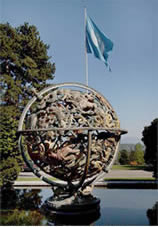
Sphere at the Palais des Nations in GenevaThe international human rights movement was strengthened when the United Nations General Assembly adopted of the Universal Declaration of Human Rights (UDHR) on 10 December 1948. Drafted as ‘a common standard of achievement for all peoples and nations', the Declaration for the first time in human history spell out basic civil, political, economic, social and cultural rights that all human beings should enjoy. It has over time been widely accepted as the fundamental norms of human rights that everyone should respect and protect. The UDHR, together with the International Covenant on Civil and Political Rights and its two Optional Protocols, and the International Covenant on Economic, Social and Cultural Rights, form the so - called International Bill of Human Rights.
A series of international human rights treaties and other instruments adopted since 1945 have conferred legal form on inherent human rights and developed the body of international human rights. Other instruments have been adopted at the regional level reflecting the particular human rights concerns of the region and providing for specific mechanisms of protection. Most States have also adopted constitutions and other laws which formally protect basic human rights. While international treaties and customary law form the backbone of international human rights law other instruments, such as declarations, guidelines and principles adopted at the international level contribute to its understanding, implementation and development. Respect for human rights requires the establishment of the rule of law at the national and international levels.
International human rights law lays down obligations which States are bound to respect. By becoming parties to international treaties, States assume obligations and duties under international law to respect, to protect and to fulfil human rights. The obligation to respect means that States must refrain from interfering with or curtailing the enjoyment of human rights. The obligation to protect requires States to protect individuals and groups against human rights abuses. The obligation to fulfil means that States must take positive action to facilitate the enjoyment of basic human rights.
Through ratification of international human rights treaties, Governments undertake to put into place domestic measures and legislation compatible with their treaty obligations and duties. Where domestic legal proceedings fail to address human rights abuses, mechanisms and procedures for individual complaints or communications are available at the regional and international levels to help ensure that international human rights standards are indeed respected, implemented, and enforced at the local level.

Human trafficking: a multi-billion dollar global business

Describing the trade and exploitation of human beings through trafficking as one of the gravest and most comprehensive violations of human dignity, UN Human Rights Chief Navi Pillay marked the first-ever World Day Against Trafficking in Persons, by urging all governments to act: “Every government has a responsibility to fight it, both directly—through investigations and prosecutions – and in the deeper sense of serious and sustained efforts at prevention.”

From the young women who have been enslaved as prostitutes or abused as unpaid domestic workers to the men who have been trapped in everlasting servitude, victims of trafficking have frequently been made vulnerable by structural discrimination and inequalities, Pillay said at a special event held in Geneva to observe the Day.
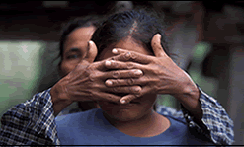
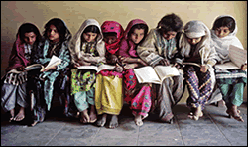
According to the International Labour Organization (ILO), about 21 million men, women and children today are coerced into various forms of forced labour, generating as much as US$ 150 billion in illegal profits per year.

“The scale and diverse nature of the problem calls for comprehensive solutions” ,Kari Tapiola, the ILO Special Advisor to the Director General, said in his address. Those who benefit from exploitation must be punished, Tapiola said, and equally there must be strong preventative measures and improved support and compensation for victims.

During the event, Mike Dottridge, the Chairman of the Board of Trustees for the UN Voluntary Fund for Contemporary Forms of Slavery, said that the international community has invested more than 1.2 billion US dollars to combat human trafficking.

“However, over the past decade there have been countless horrendous cases of trafficked adults and children going unassisted or receiving far too little help to enable them to exit the vicious cycle of exploitation,” he said.

Since its establishment in 1991, the UN Voluntary Trust Fund on Contemporary Forms of Slavery, managed by the UN Human Rights Office, has awarded several million US dollars in project grants. More than 400 organizations world-wide have used the funds to provide humanitarian, legal, psychological and social assistance to victims of modern slavery. Well over half the grants go to survivors of trafficking.

July 30, the World Day against Trafficking in Persons is the day on which the UN Global Plan of Action against Trafficking in Persons was adopted in 2010, the first-ever universal document directed at combatting human trafficking.


30 July 2014


What are human rights?


Human rights are rights inherent to all human beings, whatever our nationality, place of residence, sex, national or ethnic origin, colour, religion, language, or any other status. We are all equally entitled to our human rights without discrimination. These rights are all interrelated, interdependent and indivisible.
Universal human rights are often expressed and guaranteed by law, in the forms of treaties, customary international law , general principles and other sources of international law. International human rights law lays down obligations of Governments to act in certain ways or to refrain from certain acts, in order to promote and protect human rights and fundamental freedoms of individuals or groups.

Universal and inalienable


The principle of universality of human rights is the cornerstone of international human rights law. This principle, as first emphasized in the Universal Declaration on Human Rights in 1948, has been reiterated in numerous international human rights conventions, declarations, and resolutions. The 1993 Vienna World Conference on Human Rights, for example, noted that it is the duty of States to promote and protect all human rights and fundamental freedoms, regardless of their political, economic and cultural systems.
UNICEF/ HQ04-0734/Jim HolmesUN Photo/John IsaacUN Photo/John Isaac
All States have ratified at least one, and 80% of States have ratified four or more, of the core human rights treaties, reflecting consent of States which creates legal obligations for them and giving concrete expression to universality. Some fundamental human rights norms enjoy universal protection by customary international law across all boundaries and civilizations.
Human rights are inalienable. They should not be taken away, except in specific situations and according to due process. For example, the right to liberty may be restricted if a person is found guilty of a crime by a court of law.

Interdependent and indivisible


All human rights are indivisible, whether they are civil and political rights, such as the right to life, equality before the law and freedom of expression; economic, social and cultural rights, such as the rights to work, social security and education , or collective rights, such as the rights to development and self-determination, are indivisible, interrelated and interdependent. The improvement of one right facilitates advancement of the others. Likewise, the deprivation of one right adversely affects the others.

Equal and non-discriminatory

UNICEF photo
Non-discrimination is a cross-cutting principle in international human rights law. The principle is present in all the major human rights treaties and provides the central theme of some of international human rights conventions such as the International Convention on the Elimination of All Forms of Racial Discrimination and the Convention on the Elimination of All Forms of Discrimination against Women.
The principle applies to everyone in relation to all human rights and freedoms and it prohibits discrimination on the basis of a list of non-exhaustive categories such as sex, race, colour and so on. The principle of non-discrimination is complemented by the principle of equality, as stated in Article 1 of the Universal Declaration of Human Rights: “All human beings are born free and equal in dignity and rights.”

Both Rights and Obligations

 Human rights entail both rights and obligations. States assume obligations and duties under international law to respect, to protect and to fulfil human rights. The obligation to respect means that States must refrain from interfering with or curtailing the enjoyment of human rights. The obligation to protect requires States to protect individuals and groups against human rights abuses. The obligation to fulfil means that States must take positive action to facilitate the enjoyment of basic human rights. At the individual level, while we are entitled our human rights, we should also respect the human rights of others.